



Healthcare organizations face a growing dilemma of managing mountains of patient data, ensuring compliance, and delivering faster & personalized care without overspending on infrastructure.
Hospitals, research labs, and telehealth platforms are generating massive data every second, yet many rely on outdated, siloed systems that slow operations and increase costs. That’s where businesses use cloud computing in healthcare to store, share, and analyze the data.
According to MarketsandMarkets, the global cloud computing market is projected to reach $89.4 billion by 2024, growing at a CAGR of 17.8%. This surge reflects one thing that healthcare providers are realizing: that agility, security, and scalability are essential to survive. But with every opportunity comes complexity.
In this blog, we’ll break down how cloud computing is reshaping healthcare, including the types, benefits, and challenges of cloud computing in healthcare industry. By the end, you’ll have a clear understanding of how cloud technology can unlock higher efficiency, scalability, and innovation in healthcare.
Table of Contents
What is Cloud Computing in Healthcare Industry?
Cloud computing in healthcare industry means using the Internet to access, store, and manage data remotely. It is a flexible process for the healthcare industry. It breaks down location barriers for people to access healthcare data. Take a look at how cloud computing brings together doctors, pharmacists, physical therapists, family, authorities, wireless devices, and remote patients under a unified, secure ecosystem.
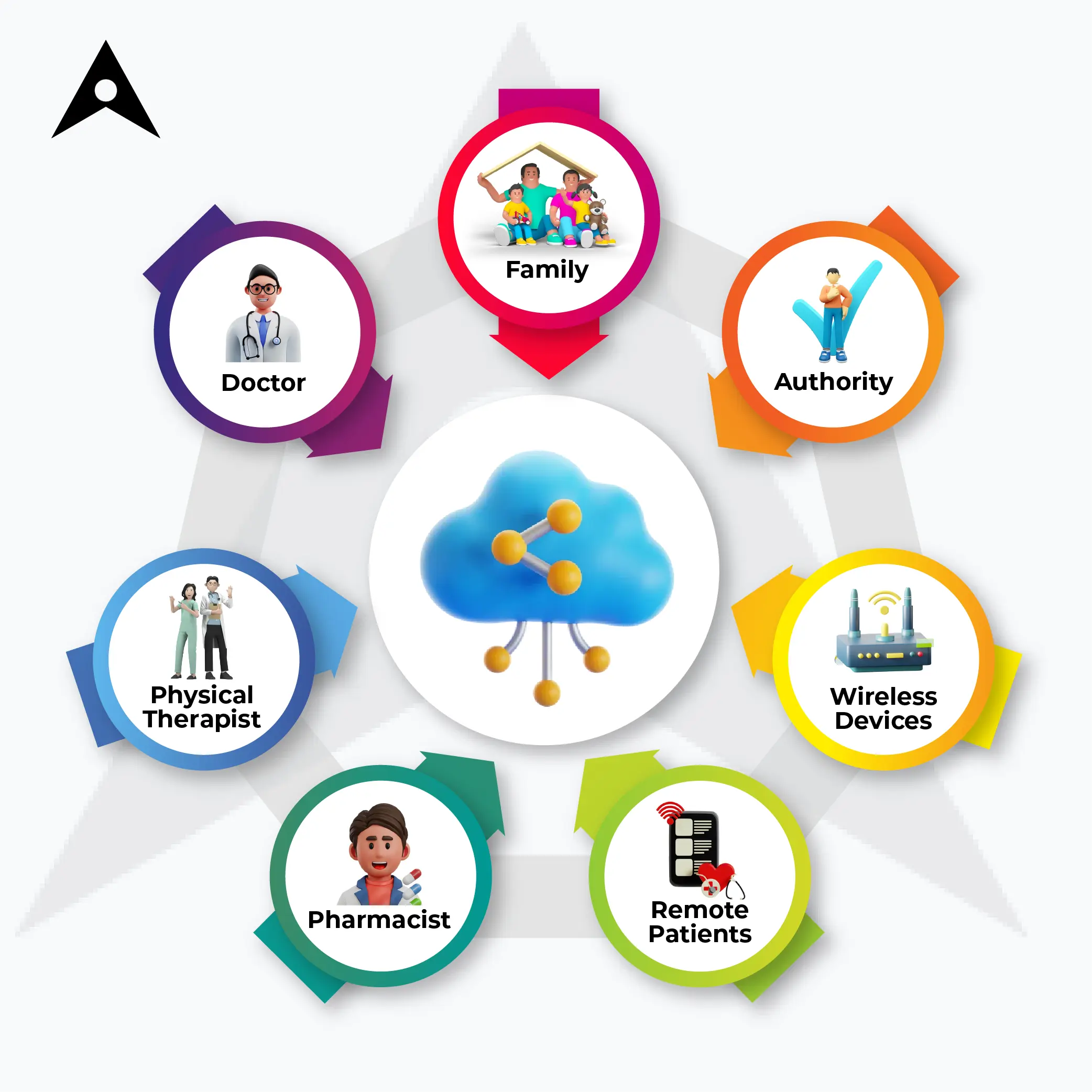
This technology benefits both healthcare institutions and patients. In healthcare industry, cloud computing helps reduce costs and personalized care through virtualization. As a result, patients are also getting used to receiving instant solutions if the professional has healthcare app development services.
Read More: Cloud computing: The Ultimate Guide to cloud infrastructure
Types of Cloud Computing in Healthcare
There are three main types of cloud computing services in healthcare.
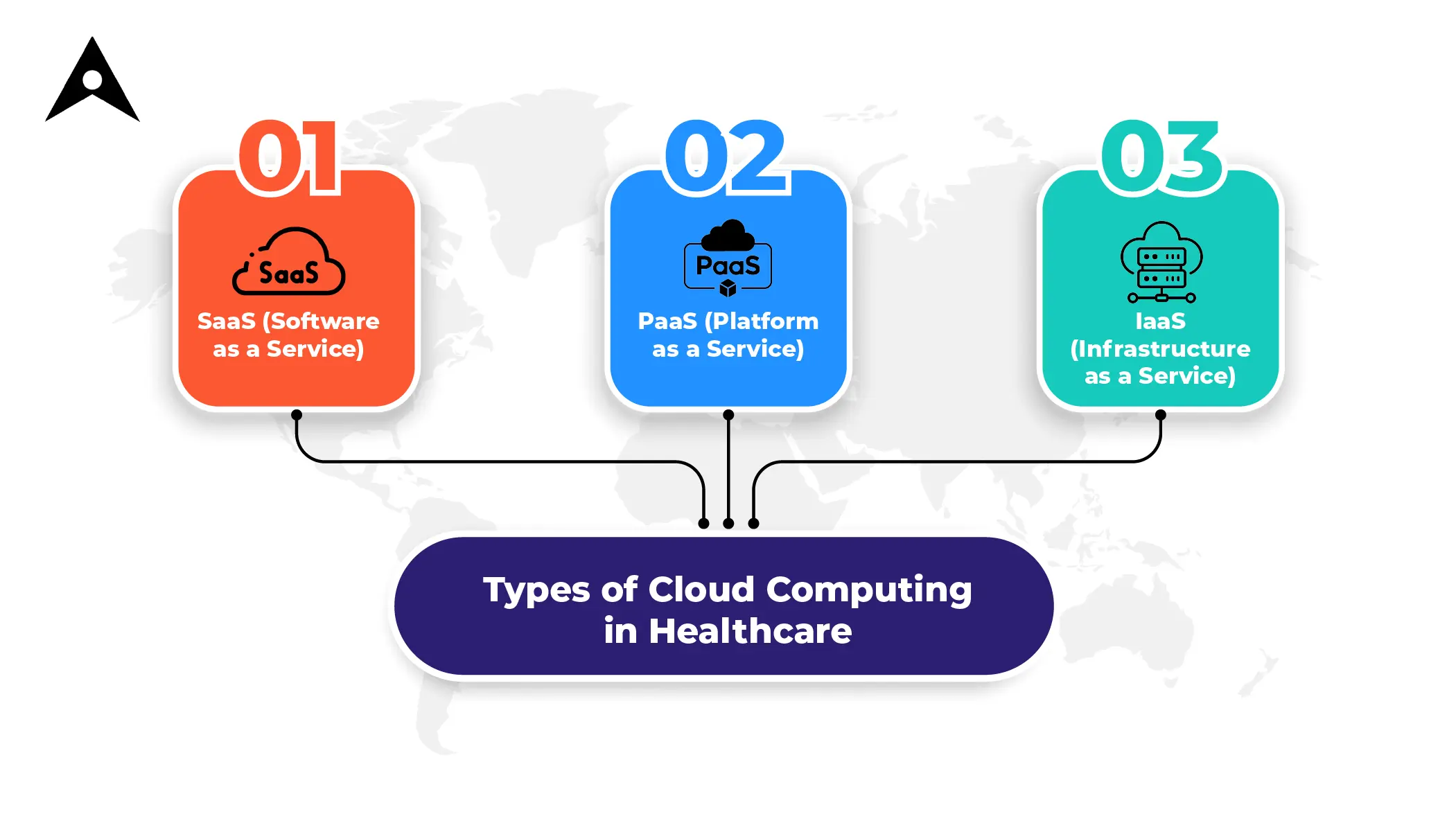
SaaS (Software as a Service)
Think of it like renting a program online. The SaaS is hosted on a server, and users can access it online. An example is Electronic Health Record (EHR) systems.
PaaS (Platform as a Service)
Here, cloud computing service clients get access to development tools. They can create and deploy the specific software a clinic might need independently.
IaaS (Infrastructure as a Service)
IaaS is like renting the basic building blocks for technology. Clients get servers, network components, hardware, and storage to use on a paid basis. The provider owns all the equipment. It is often used in healthcare research, especially developing new drugs.
The Current Scenario Of Cloud Computing In Healthcare
Cloud computing is widely used and increasingly important for healthcare organizations, with around 90% of all organizations using it. In healthcare, about 40% use a private cloud, 61% use a public cloud, 27% prefer a hybrid cloud, and 19% go for multi-cloud applications. (Source: Venture Beat)
Nearly half of professionals want a “cloud-first” strategy. They would focus on cloud technology for their tech innovations and IT projects. One of the top reasons for adopting cloud platforms in healthcare is to manage costs, with 30% of respondents considering it a primary goal. They also highlight the convenience and scalability of cloud computing as essential advantages.
Cloud computing is a popular and valuable choice for healthcare organizations due to its many benefits.
Healthcare cloud applications provide several benefits, including:
- Drug discovery: Simulating chemical reactions, conducting lab research, and creating virtual models of molecules and formulas.
- Telemedicine: Remotely monitoring patients by using video/audio surveillance. And streaming therapy sessions through telehealth technology services.
- Information management systems: Handling and sharing data with public and limited access.
- Digital libraries and shared knowledge databases: Storing and sharing information online.
- Clinical Decision Support System (CDSS): Assisting decision-making in hospitals and healthcare centers.
- Virtual education: Providing medical education in colleges and universities through online platforms.
- EHR, EMR, and healthcare appointment-management systems: Managing electronic health records, medical records, and appointments.
- Digital rights management systems (DRM): Protecting digital content and data.
- Population health research and modelling: Studying and modelling health trends in a population.
Read More: Cloud Computing Trends
Benefits of Cloud Computing in Healthcare Industry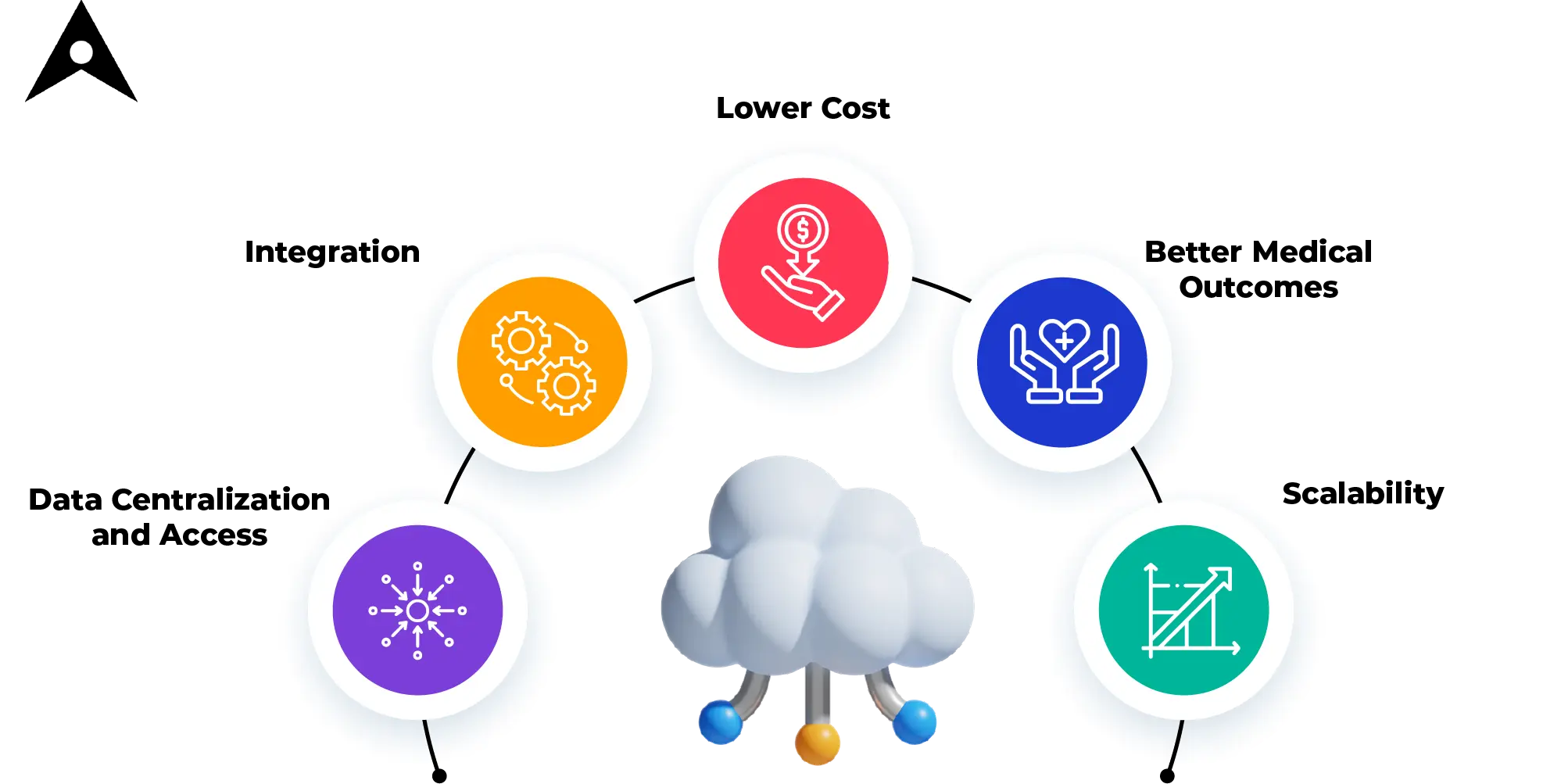
There are countless applications for cloud computing in the healthcare industry, making it a more connected and collaborative space for patients and doctors.
Cloud based healthcare brings many benefits for health and treatment. Moving to cloud computing healthcare ensures better patient services, lower costs, and greater satisfaction among medical staff in the long run.
Data Centralization and Access
Cloud computing keeps all patient records and data in one central location. It has abilities that bring different information together. Cloud based healthcare solutions make diagnosing and prescribing much easier, positively affecting patient health.
Additionally, having access to multiple data sources saves time and reduces labor costs to maintain them. It allows them to concentrate more on patient treatment instead of administrative tasks.
Integration
Cloud computing in healthcare brings information together and allows it to work with different systems. This means healthcare companies can manage only a few on-site systems. Cloud computing simplifies processes instantly and gets valuable insights from analytics.
Lower Cost
Everybody knows investing in an in-house cloud computing system will take your time and money. Because of its building, they were deploying and maintaining it. Using the cloud for healthcare offers healthcare companies greater flexibility in costs, as they only pay for the services they actually use. There’s no need for extra in-house IT resources to manage a cloud environment, and switching platforms is accessible if needed.
Therefore, utilizing cloud computing in the healthcare industry can lead to long-term cost reductions. And those savings can be implemented on other resources.
Better Medical Outcomes
Access to various data sources is ideal for better medical outcomes. The healthcare cloud technology goes along with tools like AI and predictive analytics. They offer multiple perspectives and tech-assisted diagnostics.
Cloud computing in healthcare industries helps their employees better understand diseases and accurately assess a patient’s medical history by analyzing historical data.
For instance, using AI technology, the Clinical Decision Support System (CDSS) enables doctors to diagnose by comparing a patient’s history with study results. CDSS can be implemented only through the use of cloud computing.
Scalability
Cloud infrastructure allows healthcare companies to grow and adapt quickly. When adding new software or having more users, cloud computing adjusts the data environment as needed. This differs from developing local solutions, which would require separate increases in data storage capacity and ongoing investments in additional development.

Use Cases of Cloud Computing in Healthcare Industry
Remote Patient-Monitoring
Remote patient monitoring is the fundamental way to use cloud computing in healthcare worldwide. This is done through systems that help supervise and control patients’ health from a distance. With this approach, healthcare professionals can keep an eye on health status remotely at the time of emergency.
It involves devices like the Internet of Medical Things (IoMT). They are integrated into wearable biosensors that help communicate with a specific app on the patient’s smartphone. It will collect the data and send it to the cloud server.
The technology used in such a system includes cloud-based back-end APIs (Application Programming Interfaces) and a server application.
A real-life example, could mean processing and sending ECG (Electrocardiogram) data from a patient to healthcare providers, such as cardiologists.
Automation in Pharmaceutical Business
For pharmaceutical businesses, cloud computing can be a convenient way. They have to handle various tasks like managing orders, medication stocks, and prescription records. The best part about these healthcare cloud services is that they allow flexibility in accessing data.
Healthcare cloud solutions have the power to be scalable for pharmaceutical businesses. It means they can easily increase their capabilities and manage more tasks without extra hardware.
Pharmaceutical companies can handle a large amount of data with a cloud-based system. So, investing in a cloud computing system can be an efficient step.
Big Data Analytics
Big data includes all the market trends and company data. Not using big data can put our company at a disadvantage. Businesses, no matter their size, can hire app developers with deep expertise to use big data for different reasons.
However, it requires a lot of computing resources, which can be expensive. If you buy these resources, you might have to cut spending on other vital services like marketing. But the combination of cloud and healthcare allows businesses not to worry about this.
Cloud computing in healthcare industry makes big data analytics easy, practical, and affordable. Services like Amazon Web Services (AWS) provide various analytics services for different needs.
Disaster Recovery
Not having a plan for when things go wrong can be costly for a business. Traditionally, setting up a backup site for disasters and testing your recovery plan was expensive and time-consuming.
But now, with cloud computing in healthcare industry, you can make a backup plan in the cloud. This means you create a copy of your primary business setup and regularly copy over the data and settings.
If a disaster happens at your leading site, you can quickly and reasonably easily start up your applications and data services from the cloud. This way, you can get your business back on track without much downtime.
Read More: Cloud Computing in the Sports Industry
Challenges of Cloud Computing in Healthcare Industry
Security Concerns
Security is a primary concern in healthcare due to the sensitive nature of patient information. When healthcare organizations utilize cloud security in healthcare, they entrust their patient data to external servers. The data should be confidential as it carries patient histories and so on.
The security concerns include:
- Rish of unauthorized access
- Data breaches
- Cyber attacks
Cloud application development company should implement strong security measures to overcome this challenge. That should include encryption protocols, secure access controls, regular audits, and compliance with industry regulations such as HIPPA (Health Insurance Portability and Accountability Act)
Data Availability
Immediate access to the patient’s data is essential in an emergency. However, cloud computing in healthcare helps overcome this challenge by providing the data at the right time and place. Downtime, system failures, or disruptions in internet connectivity can result in the unavailability of critical medical information.
For a quick solution, healthcare organizations implement unnecessary systems. Like they maintain mirrored copies of data in multiple locations, this solution ensures that if one system is not working, there is an alternative source to access the data.
Internet Access
Cloud computing relies heavily on internet connectivity. In remote or underserved areas, the availability of the Internet is important. Limited internet connectivity can hinder seamless access to cloud-based applications and patient records. This challenge can be a massive problem in emergencies, as it can be a matter of life and death.
In essence, these challenges highlight the need for a comprehensive and thoughtful approach when implementing cloud computing in healthcare industry.
Conclusion
With advancements in the tech world, healthcare is also adopting cloud computing solutions. Cloud computing is an efficient option for handling more significant data in healthcare. The cool part is it also supports AI in regular tasks.
Looking into the future, the goal is to have all the devices used in healthcare talk to each other smoothly. This makes sharing medical records faster and safer. All these efforts make healthcare more flexible.

FAQs
Q1. What are the use cases of cloud computing in healthcare?
There are many use cases of cloud computing. However, cloud computing services in healthcare has also many use cases, and here are four of them.
- Remote Patient Monitoring
- Automation in Pharmaceutical Businesses
- Big Data Analytics
- Disaster Recovery
These use cases showcase how cloud computing in healthcare contributes to improved patient care, operational efficiency, and innovation within the industry.
Q2. How is cloud computing used in healthcare?
Cloud computing in healthcare brings a secure system that makes managing data more flexible and scalable. In a nutshell, here’s how it works:
- Patients ask for permission: They request permission at the public cloud server, and it goes to the private cloud server.
- Permission is granted or denied: The request gets either accepted or rejected.
- Physician asks for permission: The doctor then requests permission.
- Access to data: The physician’s request is processed, and they can access the needed data from the cloud server.
- Sharing medical advice: The physician can now share medical advice directly with the patient.
In simple terms, it’s like patients and doctors asking for permission to access and share medical information securely through the cloud.
Q3. Which type of cloud is used by hospitals?
Cloud computing in healthcare industry uses the private cloud model. A healthcare business will open its server only to its employees. This model secures personal data from getting breached.
Q4. Which cloud platform is best for healthcare?
Leading cloud platforms for healthcare include Amazon Web Services (AWS), Microsoft Azure, and Google Cloud Platform (GCP). Each of these platforms offers strong security, HIPAA compliance, and healthcare-specific services.
Q5. What are some real-world examples of cloud computing in healthcare?
The top examples of cloud computing in healthcare are telemedicine platforms for virtual doctor visits, cloud-based electronic health records that can be securely accessed, remote patient monitoring using connected devices, and faster drug research through real-time data sharing.
SHARE
WRITTEN BY

Ishan Gupta
CEO & Founder
Ishan Gupta is a seasoned entrepreneur and CEO with extensive 8+ years of experience in business and mobile app development landscape. He believes that the right digital product allows companies to focus on what they do best, while technology handles the rest. With deep exposure to global markets, he understands what makes an app succeed. His approach translates business needs into clear product strategies, ensuring that every feature contributes to measurable ROI.
View All Articles






 India
India USA
USA Australia
 Canada
 UK
UK UAE
UAE