

A decade ago, fans watched games on TV or in packed stadiums. Now, sports are no longer confined to stadiums or TV screens. Fans expect more; they are looking for instant replays, behind-the-scenes access, and the thrill of being part of the game even from their couch. That’s where AR (Augmented Reality) and VR (Virtual Reality) step in.
According to industry reports, the global sports technology market is expected to cross $40 billion by 2027, with digital fan engagement as its fastest-growing segment. AR and VR are taking a major share and shaping the way fans interact with teams, sponsors, and the sports ecosystem itself. From AR-powered live stats overlays to VR stadium experiences, fans are now closer than ever to the action. For businesses, this isn’t just about giving fans “cool” experiences. It’s about monetizing engagement, creating new revenue streams, and staying ahead of competitors in the sports industry.
In this blog, you will discover how sports startups, app entrepreneurs, and enterprises can treat AR and VR as growth drivers, not experiments. You will learn how AR and VR are transforming sports apps to keep fans engaged while driving business profitability. From immersive features and fan loyalty to monetization strategies, let’s break down what’s working—and where the opportunities lie.
Table of Contents
Why Sports Apps Need More Than Scores and Highlights
Sports fans today expect more than live updates and video clips. They want experiences. Almost 70% of Gen Z sports fans prefer interactive and immersive content over passive viewing. For startups, franchises, and sports tech companies, this means:
- Traditional apps with scoreboards and streams aren’t enough.
- AR/VR offers a way to build emotional connections that drive loyalty.
- Businesses that adopt immersive tech see higher engagement time and in-app purchases.
Sports apps are no longer about watching. They’re about living the game and having an unforgettable experience. Moreover, the sports sector faces rising user expectations, fast-changing tech trends, and monetization pressures. Therefore, you must be aware of the top sports industry challenges to stay ahead of your competitors and build an app that seamlessly blends live content with interactive and immersive features.
Why Businesses Should Care About AR/VR in Sports Apps
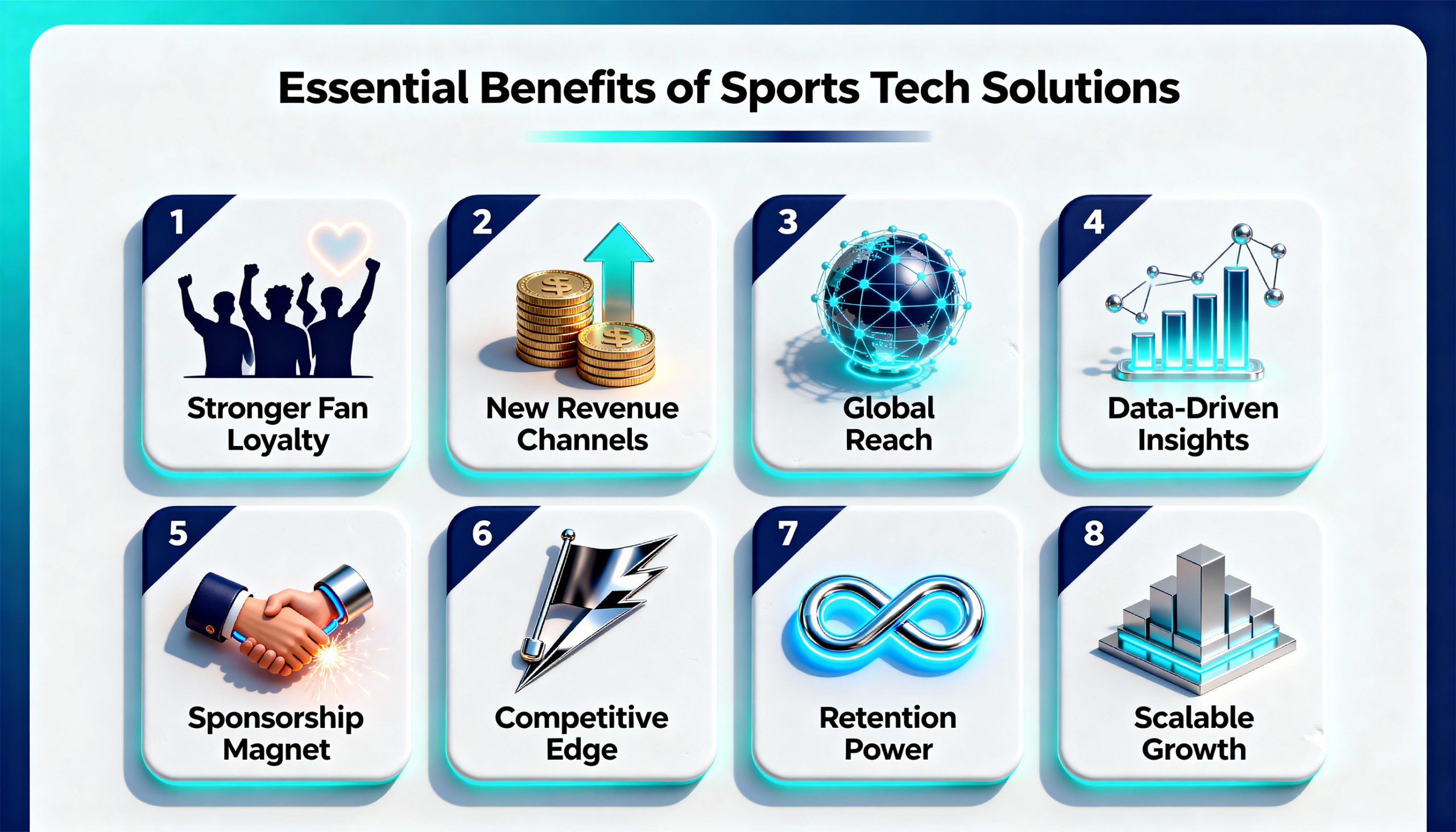
Adopting AR and VR isn’t only about keeping up with the emerging sports app development trends, but it’s also about securing sustainable growth. Here, we have mentioned some of the major benefits of incorporating AR/ VR in sports apps:
-
Keep Fans Coming Back for More
Immersive AR/VR keeps fans emotionally invested. By offering interactive features like virtual meet-and-greets or live in-game stats, it turns casual viewers into long-term supporters who engage consistently. Availing expert sports app development services ensures advanced features are seamlessly incorporated, keeping fans engaged and loyal over time.
-
Unlock Fresh Ways to Earn
From VR fan zones to AR-powered merchandise try-ons, startups unlock fresh monetization opportunities. Fans are more likely to purchase premium content, virtual goods, or exclusive experiences. Thus, boosting revenue streams.
-
Connect Fans Everywhere
Virtual stadium experiences connect fans worldwide, beyond geographic and ticketing barriers. This enables businesses to expand their audience, increase engagement, and grow international fan communities effortlessly.
-
Understand Fans Like Never Before
AR/VR engagement reveals fan preferences, enabling businesses to refine their offers and campaigns while opening new business opportunities for data analytics in sports. Data-driven insights like interaction patterns and content popularity help in making smarter business decisions.
-
Attract High-Value Partners
Interactive experiences attract brands looking for high-visibility partnerships. With AR/VR features, apps become premium platforms for advertisers. Therefore, opening doors to sponsorship deals.
-
Stay Ahead of the Game
Early AR/VR adoption positions startups as innovative leaders in the sports tech ecosystem. Offering next-gen fan experiences differentiates your app from competitors and enhances brand reputation.
-
Keep Fans Engaged Longer
Gamified AR filters, VR replays, and social features keep users returning to the app. Regular updates and immersive features encourage repeat visits. Therefore, it helps to increase lifetime user engagement.
-
Grow With Your Fans
Modular AR/VR features can expand as budgets and fanbases grow. Thus, ensuring long-term ROI. Businesses can start small and progressively add new immersive experiences without disrupting existing app performance. You can also avail professional mobile app development services to integrate advanced features into your app and to provide your users with an unforgettable experience.
Core AR Features That Make Sports Apps Irresistible
Technologies such as AR transform how fans experience sports by overlaying live stats, player info, and interactive graphics directly onto their screens. Leading sports app development company in USA suggests integrating several advanced features to make the app engaging and fun. These elements keep users hooked, encourage longer sessions, and create shareable moments that strengthen fan communities. Here, we have listed some of the core AR features that you must include in your sports app.
- Live AR Stats Overlays: Fans point their phone at the screen or field to see player stats, heatmaps, or real-time win probabilities.
- AR Ticket Scanning: Digital tickets transform into interactive entry passes. Thus, offering directions, seat views, and promotions.
- Interactive Replays: Replay key moments with AR angles that let users view plays like referees or coaches.
- Virtual Jersey Room: Fans virtually try team jerseys, caps, or accessories before buying directly in-app.
- Stadium Navigation: AR maps guide fans to seats, concessions, and amenities. Thus, reducing friction at live events.
- Fan Engagement Filters: Team-themed AR filters and effects drive social sharing and community bonding.
Core VR Experiences That Keep Fans Coming Back
VR lets fans step inside the action with fully immersive stadium experiences, 360° match replays, and virtual meet-and-greets with players. These experiences make users feel part of the game, boosting engagement and loyalty. By offering exclusive VR content, sports apps keep fans returning for more. Therefore, it helps to create lasting connections and memorable interactions.
- Virtual Stadium Tours: Explore locker rooms, VIP boxes, and field access through immersive VR walkthroughs.
- VR Match Streaming: Fans feel like they’re inside the stadium, switching between 360° camera angles.
- Fan Zones in VR: Join virtual fan lounges, interact with avatars, and celebrate wins together globally.
- Training Mode Access: Fans experience pro-level practice drills through VR simulations.
- Immersive Replays: Experience key moments of the match as if you’re right on the field, seeing every action up close.
- Exclusive Meet & Greets: Attend VR sessions with athletes, coaches, or legends for premium fan experiences.
Read Also: Sports App Development Guide: Trends, Ideas, & Key Features to Promise Massive Growth
Monetization Models: Turning AR & VR into Profits
Here’s where AR/VR shifts from fun features to serious business. Sports businesses can monetize immersive apps through:
| Monetization Stream | How It Works | Example Impact |
| Digital Ticketing | Sell VR stadium seats or AR fan passes | $20-$50 per digital seat |
| Merchandise AR Try-On | Higher conversion from virtual try-outs | 20% more jersey sales |
| Subscription Models | Fans pay for premium AR/VR experiences | Steady recurring revenue |
| Brand Sponsorships | Ads within AR filters or VR zones | Non-intrusive but profitable |
| In-App Purchases | Mini-games, exclusive highlights, fantasy stats | Boosts average revenue per user |
Real-world statistics: Deloitte reports that sports AR/VR revenue is projected to hit $5.1 billion by 2026, fueled by ticketing and subscriptions.
AR/VR and Fan Loyalty: Why Engagement Means Revenue
Sports franchises and startups are investing heavily in immersive tech because loyal fans spend more.
- Fans using AR/VR features engage 2.5x longer per session.
- Immersive users show 40% higher retention rates compared to passive viewers.
- Emotional connection through immersive apps increases lifetime customer value (LTV).
Bottom line: The longer fans spend in your app, the more opportunities you have to monetize—whether through tickets or sponsorships.
Future Outlook: Where AR/VR in Sports Apps is Headed
Looking ahead at the future of live sports streaming apps, AR and VR won’t stay optional. By 2030, immersive tech will be part of every major sports franchise’s digital strategy. Therefore, you can expect the following :
- Wider adoption of lightweight AR glasses for real-time match overlays.
- Hybrid stadiums offering both physical and VR seating.
- AR/VR integrated with NFTs and digital collectibles for new revenue models.
- Deeper integration with enterprise AI chatbot development services for automated fan engagement.
ROI Insights: Measuring Success Beyond Launch
Sports businesses or app owners often ask: Does AR/VR pay off? The answer is yes, if executed strategically. You need to know that ROI isn’t only about downloads. It’s multi-dimensional :
- Customer Trust – Transparent, secure, immersive apps foster loyalty.
- Retention Rates – Fans keep coming back for unique AR/VR content.
- Operational Efficiency – Automated moderation, AI integration, and seamless fan onboarding.
- Revenue Diversification – Beyond tickets, franchises earn from sponsorships and subscriptions.
- Investor Confidence – Immersive engagement proves long-term growth potential.
Every sports app owner or those running a sports business should treat AR/VR not as a cost center but as a growth driver. However, a globally recognized sports betting app development company can help you provide a complete roadmap to build a feature-rich app.

Wrapping Up :
Technologies such as AR and VR are becoming powerful tools that transform how fans experience games. By bringing virtual stadiums, interactive replays, live AR stats, and immersive fan zones to users’ fingertips, these technologies keep audiences engaged, loyal, and coming back for more. For sports businesses, AR/VR opens new revenue channels through ticketing, merchandise, subscriptions, and sponsorships, while providing valuable insights into fan behavior. While challenges like cost to develop fantasy sports app and device compatibility exist, a thoughtful, scalable approach ensures apps deliver lasting engagement and measurable growth. So, partner with a top-notch sports app development company to leverage AR and VR, and turn your sports app from a simple viewing platform into an unforgettable fan experience and a sustainable business asset.
FAQs
1. How do AR and VR enhance sports app experiences?
AR and VR transform passive viewing into interactive experiences. Fans can explore immersive content, see stats in real-time, and engage with their favorite teams like never before.
2. Why should sports businesses invest in AR/VR technology?
AR/VR drives higher engagement and fan loyalty. It opens new revenue streams through in-app purchases, sponsorships, and interactive campaigns. Thus, keeping businesses profitable.
3. Are AR and VR apps difficult to integrate with existing sports platforms?
Modern AR/VR solutions can seamlessly integrate with existing apps and data systems. This allows businesses to enhance fan experiences without overhauling their platforms.
4. How do AR/VR apps help in understanding fan behavior?
Interactive features track user engagement and preferences. Thus, it gives businesses insights to refine offers, campaigns, and content strategies for better results.
5. Are AR and VR suitable for both startups and big sports franchises?
Absolutely. The technologies, such as AR/VR, scale effortlessly, providing personalized experiences for small fan bases or millions of users. Thus, it ensures every business benefits.

SHARE
WRITTEN BY

Ishan Gupta
CEO & Founder
Ishan Gupta is a seasoned entrepreneur and CEO with extensive 8+ years of experience in business and mobile app development landscape. He believes that the right digital product allows companies to focus on what they do best, while technology handles the rest. With deep exposure to global markets, he understands what makes an app succeed. His approach translates business needs into clear product strategies, ensuring that every feature contributes to measurable ROI.
View All Articles