

Wearable technology in healthcare is bringing a disruptive transformation. It has brought dramatic changes in the way people manage their health & lifestyle. With the growing adoption of apps and digital platforms, the use of wearable technology for healthcare is reaching the next level.
According to the industry reports of Grand View Research, the global wearable technology market size is expected to reach USD 186.14 billion by 2030, growing at a CAGR of 13.6%. In the USA alone, 30% of adults utilize wearable healthcare devices like fitness trackers, smart glasses, smartwatches, smart glasses, and more.
And since the demand for more wearable healthcare devices is growing, the future scope of wearable tech in healthcare seems more promising. From tracking health to managing diet and diagnosing patients to accessing medical data, the benefits of wearable healthcare are extensive.
Therefore, wearable technology is shaping the future of the healthcare industry. For startups, businesses, and healthcare service providers, this technology offers immense business opportunities. It allows them to establish their venture in healthcare and solve people’s problems innovatively. So, let’s get started:
Table of Contents
What is Wearable Technology?
Wearable technology is a kind of electronic device which can be worn. Wearable devices in healthcare can be worn as accessories, embedded in clothing, etc. Individuals can use wearables for various purposes like tracking fitness and accessing data related to the body. They can also use its capabilities through mobile applications, smartphones, or IoT devices.
Wearable devices are hands-free electronic gadgets that are powered by sensors and microprocessors. They are built to communicate data between the device and the human body via the internet.
What is Meant by Wearable Technology in Healthcare?
Wearable technology in healthcare refers to the use of wearable devices and software applications for medical and healthcare purposes. This includes wearable medical devices like smartwatches, fitness trackers, smart health watches, wearable ECG monitors, wearable BP trackers, biosensors, etc.
Wearable technology offers a broad spectrum of usability in healthcare and medical services. It allows people to use wearable tech in healthcare through mobile apps and smartphones for tracking multiple physical as well as bodily activities.
As a result, this helps people get real-time and accurate health data. This not only helps the healthcare sector but also consumers in several ways.
Current Market Overview of Wearable Technology in the Healthcare Industry
Healthcare is undergoing a seismic shift as digital transformation reshapes patient care, clinical workflows, and long-term monitoring. Wearable technology is no longer a novelty. It has become an integral part of both preventive health and clinical practice, empowering providers, clinicians, and patients with real-time insights that improve outcomes, reduce costs, and increase operational efficiency.
Wearable medical devices now serve a wide range of healthcare use cases, including continuous patient monitoring, chronic disease management, early diagnosis, post-operative care, and behavioral health tracking. Hospitals and clinics worldwide are integrating wearables into digital health ecosystems to support telemedicine, remote patient monitoring (RPM), and predictive analytics. These devices collect physiological and lifestyle data. Thus, allowing clinicians to make data-driven decisions without requiring in-person visits.
In advanced markets like the USA, wearable technology is helping healthcare providers streamline workflows and reduce hospital readmissions. Payers and providers are increasingly reimbursing remote monitoring programs that use wearable devices. Therefore, making wearable healthcare solutions both clinically valuable and commercially viable.
This transformation is elevating the demand for wearable device app development for healthcare, particularly feature-rich, secure, and compliant solutions. As wearables become more sophisticated and connected, the healthcare wearable ecosystem is emerging as one of the fastest-growing segments within digital health.
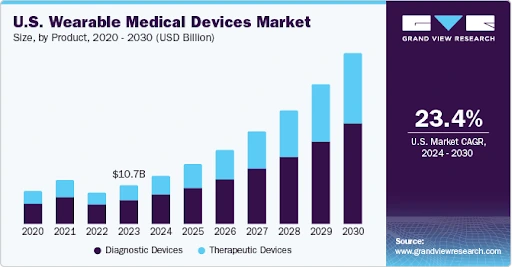
(Source: Grand View Research)
Latest Market Trends & 2026 Forecasts
- As per the reports by The Business Research Company, the global wearable medical device market will grow to $49.78 billion in 2026 at a CAGR of 23.4%. This is driven by expanding use in chronic care, remote monitoring, and integration with AI-enabled health platforms.
- In the United States, wearable ownership continues to climb, with more than 70% of adults reporting use of a smartwatch or fitness tracker as of 2025.
- Insurers and healthcare systems are increasingly reimbursing wearable-based monitoring programs, accelerating enterprise adoption.
- Smart wearable shipments worldwide are growing at a CAGR of 19.3% through 2026–2035. Thus, outpacing many traditional medical device categories.
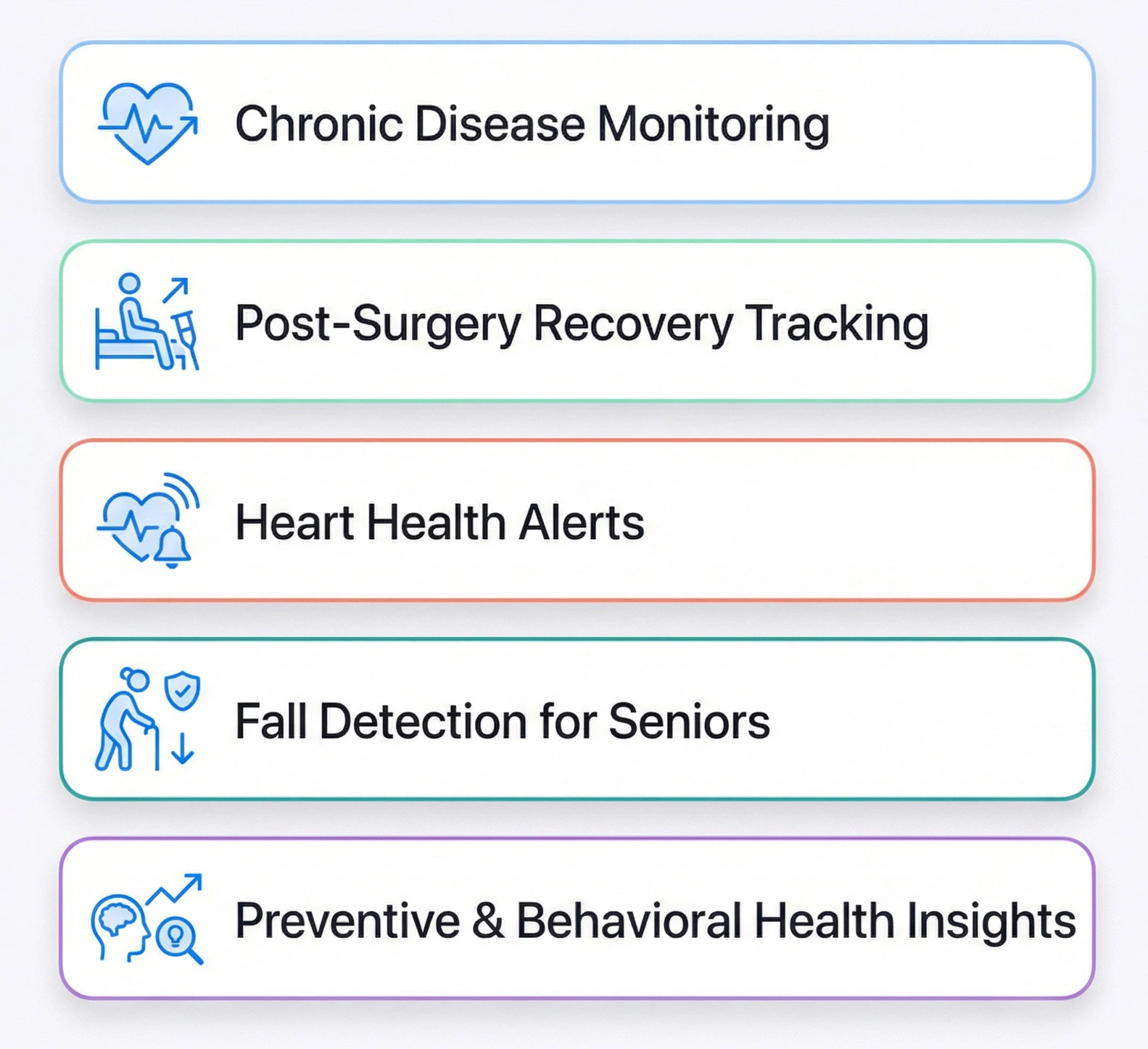
How Healthcare Providers Use Wearable Data Today
Doctors, hospitals, and care teams now trust wearable data enough to use it for diagnosis, monitoring, and decision-making. The data flows into patient records and helps clinicians act faster and more accurately.
Why Healthcare Industry Adopting Wearable Technology?
Wearable technology provides immense benefits to the healthcare and medical industry. It empowers organizations and people with personalized and real-time data accessibility. Whether it is patient care, healthcare management, fitness tracking, or athletes’ performance evaluation, the benefits of wearable technology in healthcare involve the following:
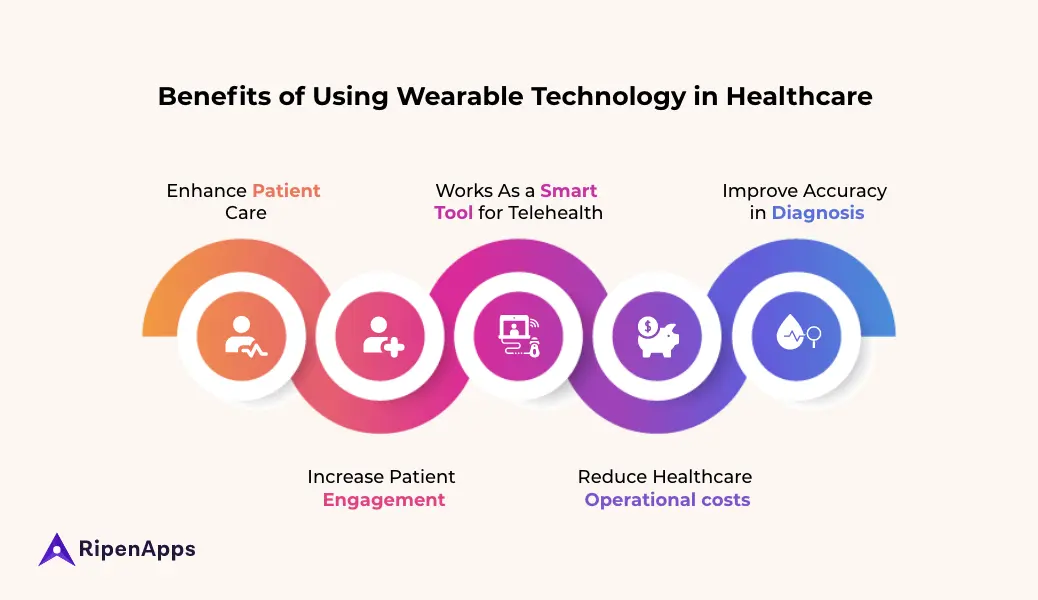
1. Enhance Patient Care
Wearable health devices come with a variety of features. It allows to track patients’ health-related data like BP, oxygen level, heart rate, calories, and other important information. These devices are used and implanted in patient’s bodies.
Hence, it makes it easier for healthcare professionals in various ways. For example, enhancing patient care by continuously and accurately monitoring patients’ health, managing disease, and ensuring medication adherence. A wearable device allows hospitals or doctors to remotely monitor patients from a healthcare mobile application.
2. Increase Patient Engagement
Wearable technology enables patients to easily track a variety of health progress metrics. It involves accessing their health information and overlooking vital signs anytime and at any location. Moreover, they can also give their feedback or record patterns on their health behaviors like diet, calorie intake, sleeping patterns, etc.
This feature helps patients identify potential areas for improvement and make a well-informed decision. Besides this, healthcare organizations and clinics can use wearable devices to record patients’ medical data in clinical trials effectively. Thus, wearable technology helps in increasing patient involvement and engagement.
3. Reduce Healthcare Operational Costs
This is one of the strongest reasons healthcare providers are adopting wearable technology at scale. With wearables, healthcare organizations reduce daily operational burdens by automating data collection and enabling continuous monitoring. Unlike traditional systems that rely heavily on manual processes and high-cost medical infrastructure, wearable-enabled ecosystems streamline workflows and improve service delivery.
Since wearable devices in healthcare are more accessible and cost-efficient than many conventional medical systems, providers are increasingly investing in digital platforms to support them. This shift is driving demand for professional healthcare app development services that integrate wearables, manage patient data securely, and optimize operational efficiency across hospitals and clinics.
4. Work As a Smart Tool for Telehealth
Telehealth is one of the emerging trends in the healthcare industry. Today, consumers prefer using services online through mobile apps. This not only helps them save significant time and effort but also in effectively getting digital healthcare services. Companies are developing a variety of wearable and telemedicine apps with modern features. They ultimately help doctors, clinics, and medical institutions in providing their facilities on mobile and web platforms.
Businesses hire mobile app developers to build wearable healthcare applications as a business model. Here, wearable technology aids in improving digital healthcare. This is because wearable tech offers features and empowers users with added capabilities. Hence, its usability scope in the future seems wider.
5. Improve Accuracy in Diagnosis
The accuracy and reliability of medical data play a critical role in diagnosis. The healthcare industry has to face many challenges in delivering accurate diagnoses. It is because traditional hardware devices come with certain limitations. In this case, wearable health devices empower doctors, clinics, and healthcare professionals in collecting patients’ health data accurately.
This becomes possible due to the capability of wearable devices. It records information in real-time using modern sensors and microprocessors. Therefore, wearable technology in healthcare works as a transformative tool by improving diagnosis.
Read Also: A Business Guide To Healthcare App Development: Benefits, Features and Costs
Future of Wearable Technology in Healthcare
The wearable healthcare technology sector is evolving dramatically with growing innovation and advancement. People are using wearable devices and applications not only for medical purposes but also for general well-being. Businesses are also working with top mobile app development companies for producing feature-rich wearable apps. They look for developing smart devices that empower users with innovative healthcare abilities.
And since their wearable devices are also used by mobile applications and smartphones. The rise in wearable technology in healthcare will also give a boost to mobile app development services. As a result, the future of the healthcare industry seems more equipped with wearables.
As per the reports of the Business of Apps, the number of health and fitness app users is skyrocketing day-by-day. In 2024, approximately 345 million people used health and fitness apps globally, a number supported by over 850 million annual downloads. This upsurge in the wearable healthcare technology market will impact the decisions of several industry players. Healthcare service providers, consumers, and businesses will take advantage of the emerging benefits of this technology.
So, how will wearable technology impact the future of the healthcare industry? Here are the top healthcare mobile app development trends that are gradually emerging and creating a new scope:
1. Expansion of Remote Patient Monitoring in Healthcare
Remote Patient Monitoring is evolving into a foundational layer of modern healthcare infrastructure rather than a supplementary service. Hospitals and care providers are deploying wearable-enabled RPM programs for chronic disease management, post-discharge supervision, and elderly patient care. These systems allow for continuous data collection beyond hospital walls.
Healthcare providers are leveraging wearable technology in healthcare to reduce hospital readmissions, continuously monitor cardiac and diabetic patients, strengthen home-based care delivery, and support value-based healthcare models. Thus, RPM is expected to remain one of the strongest growth drivers in the wearable healthcare market through 2026.
2. AI and IoT Driving Intelligent Wearable Healthcare
The integration of AI in healthcare is transforming wearable technology from simple tracking tools into predictive health systems. AI-powered wearables analyze heart rate patterns, detect anomalies, assess risk factors, and generate personalized insights in real time. This enables early diagnosis, proactive interventions, and smarter clinical decisions. As healthcare shifts toward data-driven care, AI-enabled wearables are becoming a strategic asset for providers and health-tech businesses.
At the same time, IoT in healthcare is connecting wearable devices to a larger digital ecosystem of hospitals, cloud platforms, and medical databases. IoT-enabled wearables transmit continuous patient data securely to care teams. Thus, supporting remote monitoring and coordinated treatment. This connected infrastructure improves response time, strengthens patient engagement, and builds a more integrated healthcare delivery model.
3. Growing Adoption of Wearable-Connected Healthcare Apps
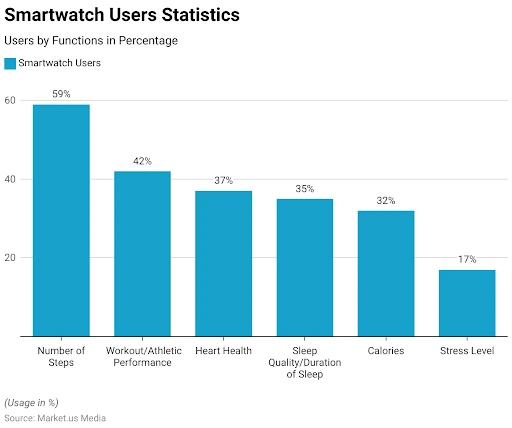
Wearable-connected healthcare apps are becoming a daily health companion for users. As smartwatch usage expands across fitness, heart monitoring, sleep tracking, and stress management, health-focused app engagement is moving from occasional use to routine behavior. This shift is redefining how people interact with healthcare data.
With wearable technology in healthcare advancing rapidly, medical and wellness apps now integrate directly with smartwatches, biosensors, and connected devices to capture real-time insights. Healthcare providers rely on this continuous data flow to support preventive care, early risk detection, and personalized treatment decisions. Wearable app development is evolving from a convenience feature to a core layer of modern digital healthcare systems.
4. Rising Demand for Advanced Wearable Medical Devices
The demand for medical-grade wearable devices is growing at a steady pace. Unlike basic fitness trackers, modern wearable medical devices are built for clinical accuracy, regulatory compliance, and real-time data transmission. Hospitals and healthcare providers now prefer devices that support diagnosis, long-term monitoring, and data-driven treatment decisions.
Devices such as ECG-enabled smart health watches, wearable ECG monitors, continuous glucose monitoring systems, wearable blood pressure monitors, and advanced biosensors are becoming part of routine care delivery. With aging populations, rising chronic diseases, and the expansion of remote care models, the global wearable medical device market is projected to reach $30.1 billion by 2026 at a CAGR of 13.2%. Thus, strengthening its role in the modern healthcare infrastructure.
Conclusion
Thus, it is evident to see how wearable technology in the healthcare industry is bringing a disruptive change. From service providers to consumers, wearable technology provides benefits to all. It helps in delivering fast, accessible, and cost-efficient healthcare services.
Hence, for businesses and healthcare service providers, this certainly sounds like a lucrative opportunity that wants to build future-proof healthcare digital solutions.
However, since it requires immense expertise in developing wearable health tech solutions. It is wise to take assistance from a professional mobile app development company like RipenApps. This is because the company specializes in creating solutions with wearable healthcare technology.
FAQs
Q1. Can wearable medical devices detect health abnormalities?
Yes, wearable medical devices are equipped with biosensors and microprocessors. They record sensitive physiological behavior like heart rate, calorie consumption, BP, etc. This helps in detecting health abnormalities.
Q2. How is wearable technology transforming healthcare delivery in 2026?
Wearable technology enables real-time health monitoring, early diagnosis, and remote patient care. It helps healthcare providers reduce hospital visits, improve outcomes, and deliver personalized treatment plans using continuous health data.
Q3. How much does it cost to build a wearable device application?
The cost of wearable app development depends on several factors. It includes the size of the application, OS platform, number of features, and much more. Thus, the best way to know the cost would be to get a quote from a recognized wearable app development company as per your specific project requirements.
Q4. How secure is patient data collected through wearable healthcare devices?
Modern wearable healthcare solutions follow strict data protection standards like HIPAA and GDPR. Encryption, secure APIs, and cloud-based compliance frameworks ensure patient data remains protected and confidential.
Q5. What role does AI play in wearable healthcare technology?
AI analyzes wearable data to detect patterns, predict health risks, and trigger early alerts. It helps clinicians make faster, more accurate decisions and supports personalized and preventive healthcare.

SHARE
WRITTEN BY

Vaibhav Sharma
Business Head
Vaibhav Sharma bridges product vision with real-world execution. He shares consultation with startups and enterprises to shape digital strategies, refine user journeys, and create app experiences that feel intuitive from day one. His strength lies in transforming early concepts into clear development roadmaps that set products up for long-term success.
View All Articles