

From late-night takeout to daily essentials, food delivery has become a habit, not a luxury. It isn’t just convenience, it’s part of a multi-billion-dollar strategy. In 2020, when the pandemic changed consumer behavior overnight, DoorDash captured almost 56% of the U.S. food delivery market, overtaking giants like Uber Eats and Grubhub. By the year 2021, the company went public and crossed a $100 billion valuation, capturing its place as the market leader.
But the question arises, how did a startup founded in 2013 by four Stanford students dominate an industry filled with established players? The answer lies in its business model, revenue streams, and market capture tactics. DoorDash didn’t just deliver food. It designed a system that worked for customers, drivers, and restaurants. They use valuable data and technology to scale faster than competitors.
For startup founders, product managers, and investors, DoorDash’s journey offers lessons on building scalable, profitable platforms. This blog breaks down its revenue sources, operations, and growth strategies while showing how you can apply these insights to your own venture. Stay tuned till the end to get some useful insights :
Table of Contents
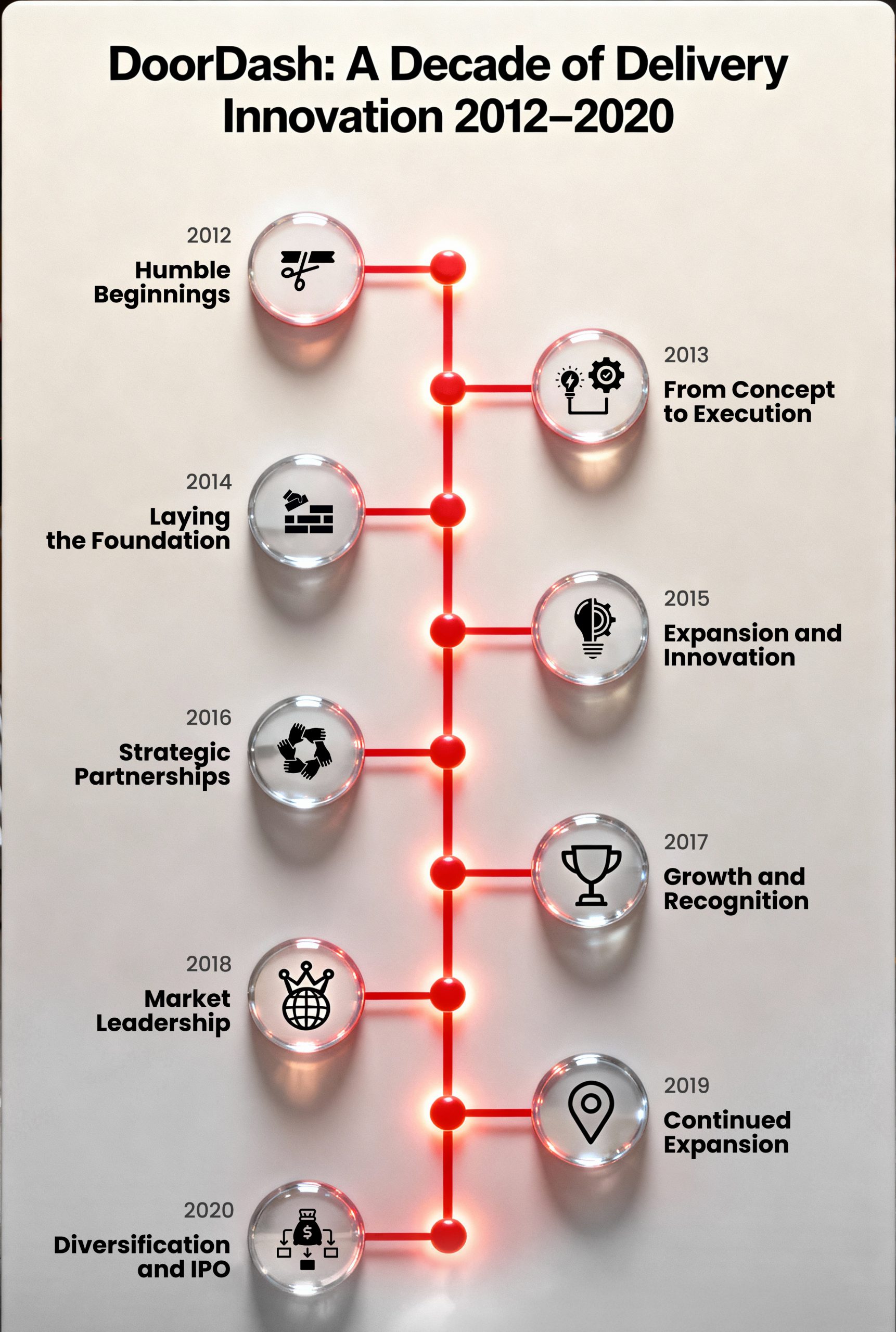
DoorDash: A Decade of Delivery Innovation
DoorDash started in 2012 with a simple idea. The app gives local restaurants the power to deliver without running their own fleets. Over the years, the company evolved from a Stanford project into a delivery giant. By 2014, it had raised millions in funding and began scaling aggressively. In 2017, DoorDash tested delivery robots, proving its focus on logistics innovation. By 2020, the company went public after raising billions and capturing nearly 50% of the U.S. food delivery market. Its journey shows startups how consistent innovation, customer focus, and strong execution can turn a small idea into a household name.
What Features Make DoorDash Stand Out?
For anyone looking to build an app like DoorDash, it’s important to know what makes it unique. Here are some of the top features to build a successful food delivery app like DoorDash.
- User-Centric Design – A clean, simple app flow makes ordering food effortless, with one-click reorder and personalized recommendations.
- Flexible Options – Customers can choose scheduled deliveries, real-time tracking, and even group ordering.
- DashPass Subscription – A loyalty driver, offering free or discounted deliveries for frequent users, ensuring repeat business.
- Merchant Tools – Restaurants get dashboards to manage menus, pricing, promotions, and customer data.
- Driver Support (Dashers) – Separate driver app with route optimization, earnings tracking, and flexibility
- Expansion Beyond Food – Groceries, alcohol, flowers, and retail items, making DoorDash a multi-category logistics platform.
Why DoorDash’s Business Model Matters for Entrepreneurs
Over the past few years, DoorDash has become more than a food delivery app. It’s a blueprint for how to build an on-demand platform that balances user convenience, partner satisfaction, and operational efficiency.
It’s crucial to understand that its business model matters because of the following reasons :
- Startups learn how to design revenue systems beyond one-time transactions.
- Investors get insights into what makes platforms scalable and defensible.
- Product managers see how customer experience ties into monetization.
- Business strategists discover how partnerships and logistics fuel growth.
DoorDash cracked the code of turning a high-cost, low-margin business into a profitable enterprise. For startups aiming to replicate this success, it’s crucial to choose the right food delivery app development company that understands scalability, logistics optimization, and user engagement. Let’s see how DoorDash made it work.
The Core of DoorDash: Who Are Its Stakeholders?
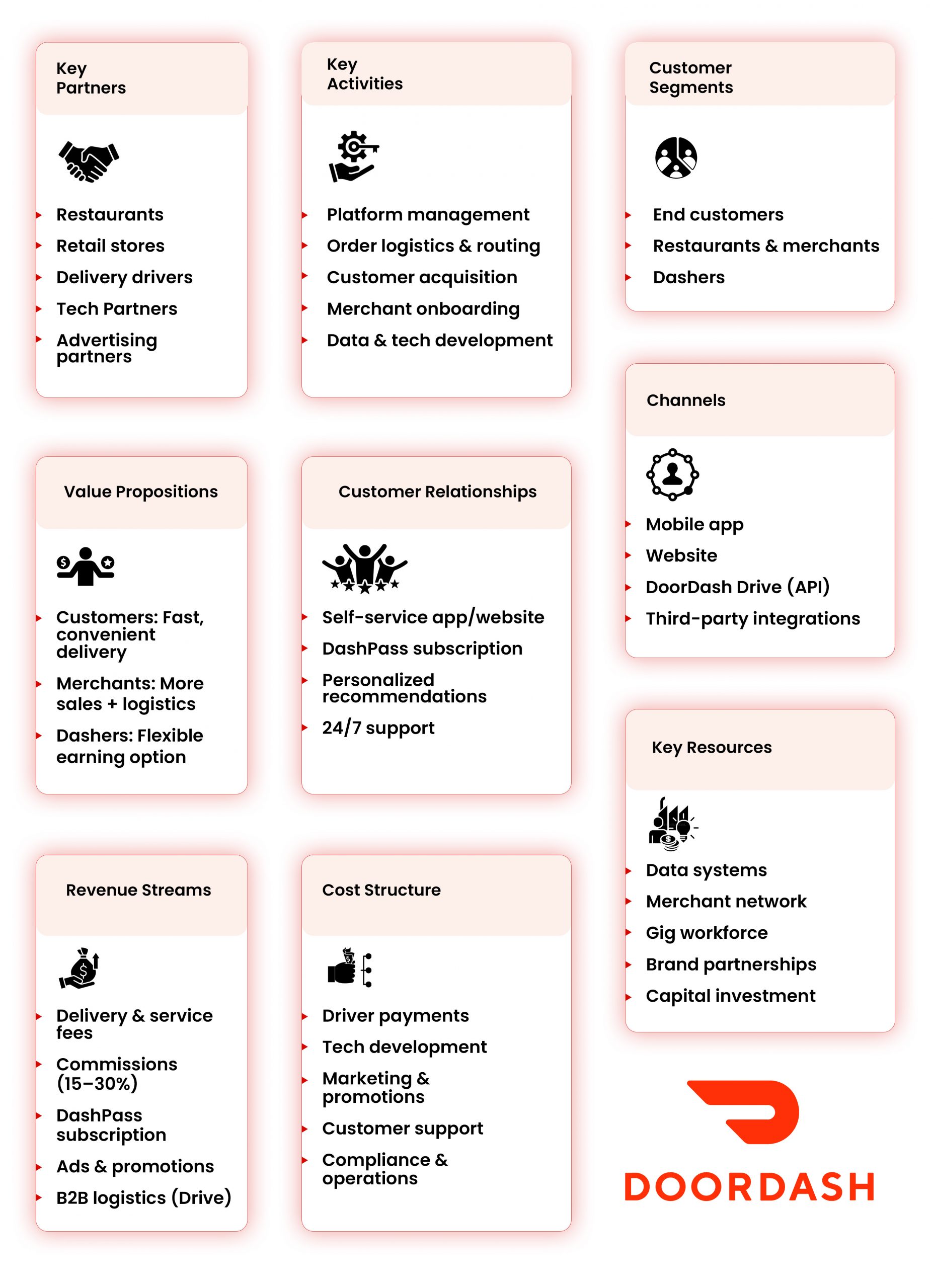
Every business model begins with identifying stakeholders. DoorDash connects three groups in its ecosystem:
- Customers – People who order food, groceries, and convenience items via the app.
- Merchants (Restaurants & Stores) – Businesses that list products on DoorDash and pay commissions for visibility and delivery. Many merchants also partner with a leading product development company to optimize their offerings, improve menu presentation, and enhance customer experience on the platform.
- Dashers (Delivery Drivers) – Gig workers who fulfill orders, paid per delivery plus tips.
DoorDash’s success lies in balancing the needs of all three. Customers want fast, affordable deliveries. Restaurants want more orders without losing margin. Dashers want flexible income opportunities. The platform ensures each group benefits while it collects revenue at multiple touchpoints. For entrepreneurs inspired by this model, working with top food delivery app development companies can help in designing platforms that align customer satisfaction with profitability.
Revenue Streams: How DoorDash Actually Makes Money
DoorDash built a multi-channel revenue system. Unlike traditional businesses that rely on one source, DoorDash spreads income across fees, subscriptions, and partnerships. The platform also focuses on engagement factors for boosting food delivery app revenue, such as loyalty programs like DashPass, personalized promotions for customers, and advertising options for restaurants. By combining these revenue streams with high user engagement, DoorDash ensures both consistent income and long-term growth. Here, we have mentioned a few DoorDash revenue streams :
1. Delivery & Service Fees from Customers
Customers pay a delivery fee per order, usually between $1.99 to $6.99, depending on distance, demand, and restaurant. Additionally, a service fee (up to 15%) is charged to cover operational costs. These fees account for a significant portion of DoorDash’s direct revenue.
2. Commissions from Restaurants
Merchants pay commissions ranging from 15% to 30% per order. Higher commission tiers offer better visibility, marketing tools, and promotional boosts. For restaurants, it’s customer acquisition at scale, and for DoorDash, it’s a recurring income stream. Partnering with a top-notch restaurant app development company can help eateries build their own digital presence and reduce heavy reliance on third-party commissions.
3. DashPass Subscription
DoorDash launched DashPass, which is a monthly subscription at $9.99, offering free or discounted delivery. As of 2024, over 22 million users subscribed. This recurring revenue stabilizes income and drives loyalty in the long run.
4. Advertising and Promotions
Merchants can pay for sponsored listings and targeted promotions. During the process of delivery app development, these ads give restaurants better visibility inside the app. Therefore, it creates another high-margin revenue source for DoorDash.
5. White-Label Logistics (DoorDash Drive)
Beyond its consumer app, DoorDash offers last-mile delivery for businesses through DoorDash Drive. For example, local shops or even large chains like Walmart use DoorDash for order fulfillment. This B2B service expands revenue beyond restaurants.
6. Partnerships and New Verticals
DoorDash has expanded into groceries, alcohol, flowers, and convenience goods. Each category introduces new partnerships and additional revenue channels.
Takeaway for Startups: Don’t rely on one income source. Build layered monetization models to stabilize revenue and scale sustainably. You can avail professional food delivery app development services to build a high-revenue-generating app.
Market Capture Tactics: How DoorDash Won Against Giants
Competing with Uber Eats and Grubhub wasn’t easy for them either. DoorDash had to find unique tactics to stand out. Here are a few of the market capture tactics followed by them :
1. Hyperlocal Expansion Strategy
Instead of spreading too thin, DoorDash focused on dominating suburban markets where competitors were weak. It captured smaller geographies first. Thus, they created loyalty before moving into big cities.
2. Customer-Centric Innovations
DoorDash introduced contactless delivery, real-time order tracking, and personalized recommendations early. The company invested in food delivery application development to seamlessly integrate these features. They aimed to keep customers engaged and improve retention in the long run.
3. Flexible Workforce Model
DoorDash leveraged the gig economy. Dashers sign up easily, work flexibly, and earn per delivery plus tips. This low fixed-cost workforce enabled rapid scaling.
4. Data-Driven Logistics
DoorDash uses algorithms to optimize delivery routes, driver availability, and peak demand predictions. Efficient logistics lowered costs and improved delivery speed.
5. Strategic Partnerships
DoorDash partnered with grocery stores, pharmacies, and retailers to expand beyond food. This diversification attracted more users and increased order frequency.
Lesson for entrepreneurs: Market leadership doesn’t come from doing everything at once. It comes from solving one market deeply, then scaling outward. For example, if you’re evaluating the cost to build a food delivery app like HelloFresh in Australia, focusing first on perfecting one region or service before expanding nationwide is often the smarter growth path.
Operational Efficiency: The Silent Growth Engine
Behind the app’s user-friendly interface lies a highly optimized supply chain.
- Micro-Fulfillment Hubs: DoorDash invested in local hubs to reduce delivery time.
- AI-Powered Predictions: Demand forecasting ensures enough Dashers are available at peak times.
- Batch Deliveries: Dashers often deliver multiple orders in one trip, maximizing efficiency.
- Cost Optimization: Gig workforce, combined with automation, keeps overheads lower than traditional models.
This focus on operational efficiency gave DoorDash an edge in profitability per delivery, something competitors struggled with. For startups, partnering with the right mobile app development company is key to building similar efficiency into their platforms, from seamless user experience to optimized logistics.
The Competitive Edge: Why DoorDash Leads the Market
DoorDash didn’t become #1 by chance. Its advantages include:
- Customer loyalty through DashPass subscriptions.
- Broader merchant network with over 390,000 restaurants and stores.
- Superior logistics technology reduces delivery times.
- Aggressive market expansion into groceries and retail.
- Localized strategy that outperformed competitors’ broad but shallow approach.
Read Also: Food Delivery App Development: Decoding Success Formula From World’s Top 5 Food Delivery Apps
Challenges DoorDash Faces in Sustaining Growth
No business model is perfect. DoorDash faces hurdles that entrepreneurs should note:
- High competition from Uber Eats, Instacart, and niche delivery startups.
- Thin margins due to high delivery costs and customer discounts.
- Regulatory risks as governments debate gig worker rights.
- Customer churn occurs if fees rise too high or competitors offer better deals.
For startups, this highlights the importance of balancing growth with sustainability. Choosing the right food delivery app development strategy is critical to building a platform that can scale while staying profitable in the long run.
What Startups Can Learn from DoorDash
DoorDash’s journey offers practical lessons for founders and strategists:
- Start Niche, Scale Wide – Startups should focus on underserved markets first, then expand.
- Layer Your Revenue Streams – Subscriptions, ads, commissions, and partnerships create stability.
- Leverage Data – Predict demand, optimize logistics, and personalize user experience.
- Balance Stakeholders – Build value for customers, partners, and workers simultaneously.
- Expand Beyond Core Offering – Diversify into adjacent markets once the base is strong.
Future Outlook: What’s Next for DoorDash?
Looking ahead, DoorDash aims to:
- Expand further into groceries, alcohol, and retail deliveries.
- Invest in automation and AI-driven logistics like drones and robotics.
- Enhance profitability per order through smarter batching and cost controls.
- Expand internationally, building presence outside the U.S.
For entrepreneurs, the future of on-demand platforms is clear: success will depend on tech-driven logistics, multi-vertical expansion, and customer-first innovation.
Wrapping Up :
DoorDash started with a simple idea — delivering food from local restaurants. Today, it’s a global platform redefining how consumers access food, groceries, and convenience goods.
Its success lies in combining diverse revenue streams, market capture tactics, and operational efficiency. For startup founders and investors, DoorDash proves that on-demand platforms thrive when they balance technology, partnerships, and user experience.
If you’re building or investing in a similar model, the lesson is simple: focus on solving real problems, diversify your income sources, and use data as your competitive advantage.
FAQs
1. How does DoorDash actually make money?
DoorDash earns revenue mainly from delivery fees, service charges, and commissions paid by restaurants. It also generates income from subscriptions like DashPass, advertising placements, and white-label delivery services through DoorDash Drive.
2. What makes DoorDash different from other food delivery apps?
DoorDash focuses heavily on local restaurants and small businesses, not just big chains. It also has a strong market presence in suburban areas, where competitors often lag. Therefore, it gives it a unique customer base.
3. How much does it cost to build an app like DoorDash?
The food delivery app development cost depends on several factors, such as features, design complexity, and platforms (iOS, Android, or both). A basic food delivery app might start at $30,000–$50,000, while a full-scale platform like DoorDash with advanced logistics can go beyond $100,000.
4. What features are essential in a DoorDash-like app?
Key features include customer ordering, restaurant dashboards, driver (Dasher) apps, real-time tracking, payment integration, and ratings. For scalability, you’ll also need advanced analytics, subscription models, and ad placements.
5. How long does it take to launch a DoorDash-like app?
A basic MVP (Minimum Viable Product) can take 6-8 months, while a full-scale app with advanced logistics and integrations may take 9–12 months. The timeline depends on scope, features, and your development partner.

SHARE
WRITTEN BY

Ishan Gupta
CEO & Founder
Ishan Gupta is a seasoned entrepreneur and CEO with extensive 8+ years of experience in business and mobile app development landscape. He believes that the right digital product allows companies to focus on what they do best, while technology handles the rest. With deep exposure to global markets, he understands what makes an app succeed. His approach translates business needs into clear product strategies, ensuring that every feature contributes to measurable ROI.
View All Articles