

Can you imagine building a futuristic skyscraper without having a detailed blueprint?
Of course not! That’s exactly what developing software is like without implementing the SDLC approach.
Whether you’re a startup founder shaping your first MVP or an established business scaling your existing systems, the Software Development Life Cycle has become more critical than ever in 2026. SDLC provides you with clarity and discipline that is needed to build impactful and scalable software.
For business founders and entrepreneurs, exploring the complexities of the SDLC can be the key to transforming their visionary ideas into a successful product. It isn’t just a technical necessity; instead, in 2026, it has become a strategic edge. It can reduce any development-related risks and ensure that every decision aligns with your goals and budget.
In this blog, you will get some useful insights about the SDLC process. You are also going to explore how each SDLC stage propels your business forward in a tech-driven landscape. So, get ready to embark on a successful journey of building software according to your business needs.
Table of Contents
What is SDLC (Software Development Life Cycle)?
The Software Development Life Cycle (SDLC) is a structured process that involves the creation of high-quality software within the shortest possible time and cost. It works as a critical engine within the broader product development life cycle (PDLC) and involves several processes of developing, deploying, and maintaining premium-quality software. It is specifically designed to ensure quality, predictability, and cost-effectiveness.
SDLC has evolved with changing end users’ expectations. It is beyond just a checklist and ensures that software development teams integrate automation, AI-driven coding principlesm and various cloud deployment models. It reduces risks, shortens timelines, and improves product outcomes.
The modern SDLC in 2026 also breaks down the complexities of software creation into manageable SDLC phases. It is more of a framework that outlines the complete process from initial ideation to final deployment and ongoing maintenance.
For entrepreneurs and business founders, SDLC is more than a technical tool. It’s a strategic framework that ensures every phase of development aligns with your business objectives, timeline, and budget. So, you need to make sure that your software development team follows the SDLC approach.
Business Benefits of the Software Development Life Cycle
Implementing a modern SDLC in 2026 offers numerous advantages for businesses that they can’t afford to overlook. Here are some of the key benefits of SDLC:
1. Project Management
It provides a clear roadmap and helps business owners define roles to enhance coordination. This structured SDLC roadmap aligns founders, teams, and stakeholders, thus helping the process become faster and more efficient.
2. Higher Quality
Quality assurance, systematic testing, and validation during the software development life cycle ensure a bug-free product, helping you deliver more stable and user-friendly products. This means fewer production issues, and you can provide a better user experience to your users.
3. Cost Efficiency
Early detection of issues or technical glitches helps you to reduce the total cost of ownership (TCO) as it prevents expensive rework. SDLC also enables more accurate budgeting and resource management utilisation, especially important for startups and MVP builds.
4. Communication & Transparency
SDLC encourages continuous communication, and in this way, developers can communicate in a better way with stakeholders and business founders. Clear documentation and workflow clarity eliminate any type of surprises in the SDLC stages and misunderstandings as well.
5. Future Proof Solution
As it is a structured and iterative process, it supports project scalability and helps teams expand features, onboard new users, and evolve the project without disrupting any core functionalities. In 2026, this also includes the flexibility to integrate AI features, intelligent automation, and modern tech upgrades.
6. Stronger Security
A modern software development lifecycle helps detect vulnerabilities, meet compliance expectations, and thus results in addressing threats early. It is a crucial process as cyber risks are rising across industries.
This is verified by over 72% of respondents. In the Global CyberSecurity Outlook survey, they reported that there is an increase in operational cyber risks, with ransomware remaining one of the most crucial concerns.
Stages of the Software Development Life Cycle
Business Founders must be aware of the SDLC phases, as it will help them to grasp the importance of each step. By understanding these SDLC stages, you will also know how this approach contributes to the final product.
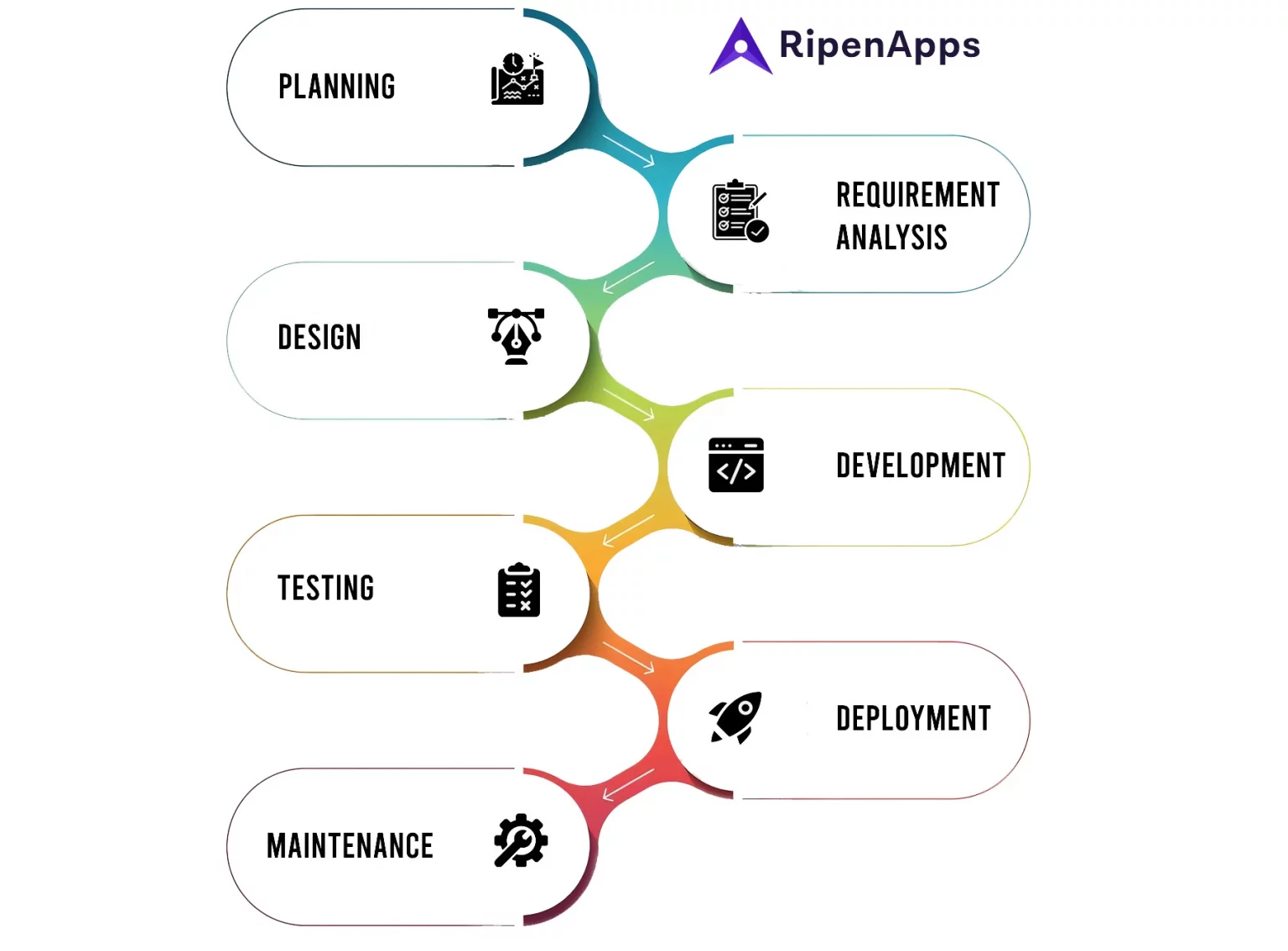
So, let’s dive into the software development life cycle stages and understand what this modern SDLC in 2026 means for every business founder:
1. Planning
The initial software development life cycle stage is the planning. This phase includes the creation of a comprehensive project roadmap. During this step, resources are allocated, timelines are set, and potential risks are identified. Here, you need to leverage real-time market validation and AI in MVP development to strengthen decision-making. So, to kick-start your project, you can’t skip this SDLC step.
Why It Matters:
Planning is necessary for business owners to ensure that the project objectives or goals align perfectly with the available resources. Moreover, it also provides a dedicated timeline for investors and stakeholders. For the planning stage, you can discuss your project with the best software development company. They can provide you with a complete roadmap for your project.
Example:
A fintech startup business can plan its app or software launch to coincide with a major industry event. Thus, aligning with marketing and development timelines.
2. Requirement Analysis
Analysing your project requirements is the next step of the SDLC process. This includes collecting and documenting the technical business requirements of your software project. You also need to include data privacy requirements so that you are complying with legal regulatory standards, such as CCPA, HIPAA, GDPR, or any other region-specific compliance laws.
Why It Matters:
This is a crucial step because it ensures clarity on project objectives. Also, entrepreneurs can know how to avoid costly changes during later SDLC stages.
Example:
An e-commerce startup business can define its need for features such as secure payment gateways, user-friendly interfaces, and robust search capabilities according to the specific business requirements.
3. Design & Prototype
The next SDLC step is to design & build a prototype of your software. This stage primarily focuses on the system’s architecture and user interface. It’s where innovation and creativity meet functionality. For this, you can also leverage top-rated MVP development services to create visually appealing designs for your MVP-first software.
Why It Matters:
Designing is one of the most important software development lifecycle stages as it sets the stage for technical and user-centric development. Apart from it, also facilitates team collaboration through clear blueprints. Therefore, if you are planning to build software, you have to pay attention to the design part.
Example:
An AI-driven mental healthcare software prioritises intuitive navigation to ensure accessibility for all users or patients. Also, they will not feel frustrated while using the app or software.
4. Development
The actual coding of your software begins here. Software developers use the design documents to build the software according to the project requirements. Therefore, we can say that the development stage is often the most time-intensive phase. This is why it’s essential to hire mobile app developers with the right expertise to handle this critical phase effectively, ensuring the software meets your expectations and industry standards.
Why It Matters:
Paying attention to the development stage is crucial as it helps you to bring your vision to life. Also, it ensures modular and scalable code.
Example:
Developers create a social media app’s backend to handle high traffic and real-time data processing. They can also build software to engage stakeholders and fulfil the desired requirements.
5. Testing
Another crucial phase of the life cycle of software development is testing. You need to make sure to conduct rigorous testing regularly to identify and fix bugs. This phase ensures the software meets quality and functionality standards. Teams now adopt automated testing and security validation, such as shift-left testing. It helps you to reduce post-launch defects.
Why It Matters:
Doing regular software testing helps you prevent user dissatisfaction due to glitches or any other technical faults. Also, it enhances the software’s reliability, especially for users.
Example:
A cloud-computing software undergoes testing to ensure smooth performance and store enough data.
6. Deployment
Deployment is also a necessary phase in the Software Development LifeCycle. During this stage, the software is released to the end users. Depending on the project specifications, this may involve a beta launch or a full-scale rollout. For the beta launch of your software, you can seek help from a leading and experienced IT consultancy.
Why It Matters:
The deployment phase plays a crucial role in taking valuable user feedback and insights for future updates. Also, it helps business owners to understand that the development process or efforts are aligning with the project’s objectives.
Example:
A startup launches its software in select cities before expanding nationwide.
7. Maintenance
Next comes software maintenance. This phase involves regular updates, bug fixes, and performance enhancements to ensure the software remains relevant and efficient. To stay modern and future-fit, maintenance today includes continuous monitoring, security patching, and user-driven upgrades, helping you stay competitive in this software development market.
Why It Matters:
You need to maintain your software to keep it competitive and user-friendly. Additionally, it will also address the dynamic or evolving user needs and market emerging trends.
Example:
Business owners choosing to add new features to their software to stay ahead in a competitive market.
Secure SDLC (SSDLC): Preventing Threats Before They Happen
Security is one of the most crucial aspects of the SDLC. You need to integrate security measures seamlessly into every software development life cycle phase. This is crucial to ensure that vulnerabilities can be easily identified and addressed in the best possible way. You must adopt the latest secure SDLC (SSDLC) practices. Some of them are:
- Security reviews at every stage
- Automated vulnerability scanning to check issues
- Real-time threat detection to neutralise any suspicious activity
Keep note of various security protocols such as secure coding practices, threat modelling, and regular audits, to reduce the risk of breaches and safeguard your user data. Therefore, following this approach is especially crucial for various industries like finance and healthcare, where sensitive information is processed.
Choosing the Right SDLC Model
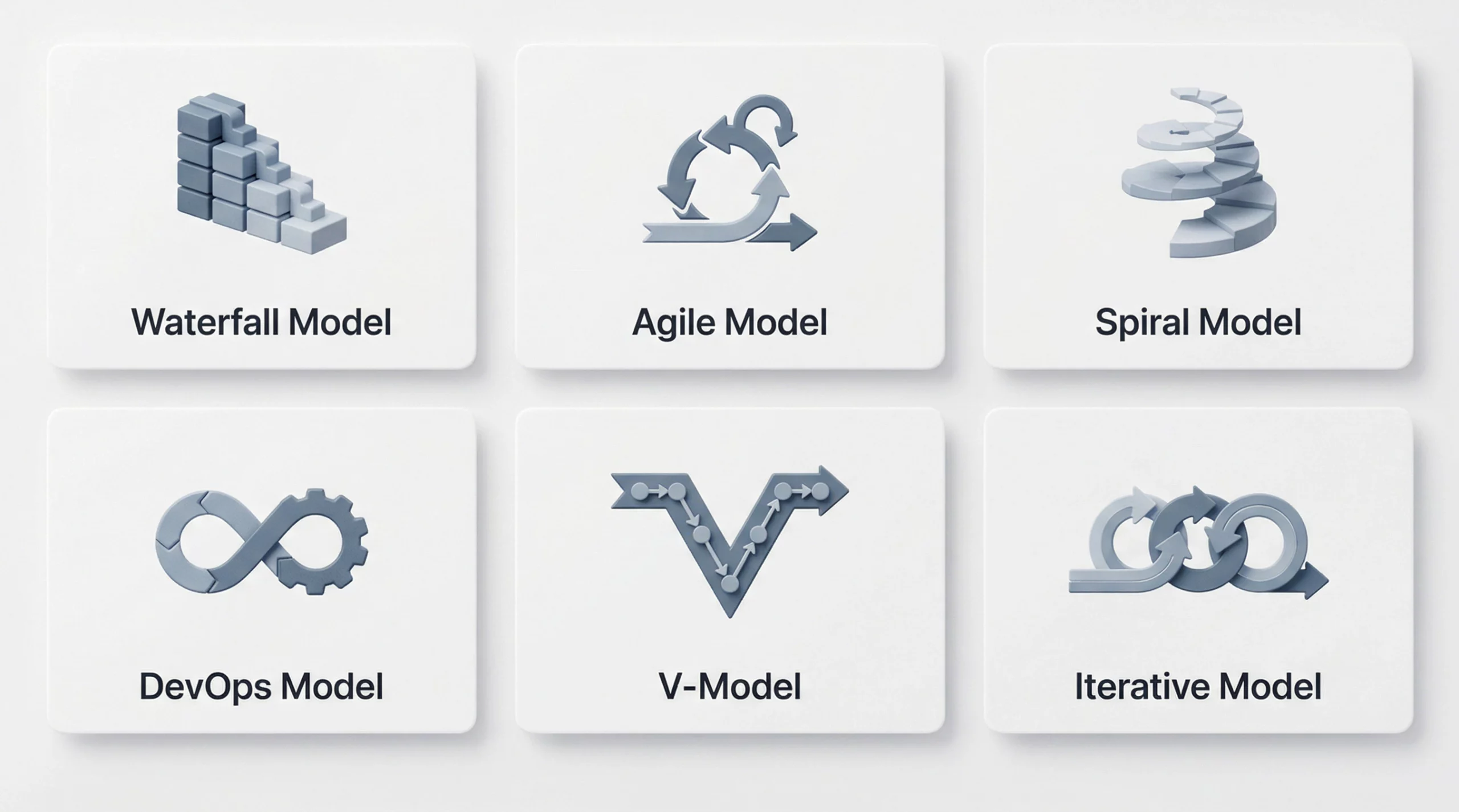
SDLC models offer a more structured approach to software development. Each model is suitable for different project types and requirements. So, here we have mentioned some of the popular models:
Waterfall Model
This SDLC model represents the most structured methodology. It follows a linear approach, which means completing one phase before moving to the next step. The waterfall software development life cycle is suitable for various projects with well-defined requirements. However, if your project requirement is flexible, this model doesn’t work well because changes can directly affect the cost, time, and quality of the software.
Agile Model
The Agile software development life cycle emphasises more on flexibility. Agile methodology mainly focuses on iterative progress and collaboration. The software development agile life cycle breaks the project into smaller cycles called sprints. Therefore, it allows for continuous feedback and adaptation. Moreover, you can combine agile methodology with the latest DevOps practices, thus achieving continuous deployment and faster time-to-market.
Spiral Model
The spiral software development life cycle model combines iterative development with risk assessment. Also, this model is ideal for large, complex projects. So, if your project requires frequent evaluation and refinement, then you can choose this model. It is now commonly applied in enterprise transformation and AI-led system modernisation.
DevOps Model
This model aims to combine development and operations teams. It emphasises continuous integration and delivery. That means it also focuses on automation for faster development and deployment cycles. It has become a standard nowadays. You can leverage AI-driven CI/CD pipelines, AI-native development, and automated monitoring.
V-Model
The V-Model is also well-known as the Verification and Validation model. It emphasises testing at every development stage to ensure alignment with your project requirements. It is more suitable for business projects where quality is a top priority. Teams now enhance the V-Model with automated quality assurance and security testing for higher reliability.
Iterative Model
When it comes to the iterative model focuses more on developing an initial version of the software, improving it through repeated iterations based on feedback. This model is widely adopted for MVP development and AI-enabled products that evolve based on real usage.
However, you must note that choosing the right SDLC model depends on project requirements, team capabilities, and desired outcomes.
Final Remarks
The modern SDLC approach helps software development teams to move faster with less risk. It has evolved in such a way that it includes advanced technologies such as automation tools, AI-driven workflows, and DevOps pipelines. Software Development Life Cycle (SDLC) enables you to deliver high-quality software efficiently. From its well-defined SDLC stages to its multiple models, it offers a robust framework to ensure your software’s success.
Also, embracing different methodologies such as Agile SDLC and integrating security at every SDLC step can further enhance the software development process. So, by properly leveraging some useful insights from this guide, business founders, entrepreneurs, and investors can make more informed decisions.
Additionally, you can partner with the right software development partner to ensure your SDLC plan turns into a successful product. At RipenApps, we specialise in building scalable, market-ready apps using modern SDLC practices.
FAQs
1. How Software Development Life Cycle Work?
The Software Development Life Cycle (SDLC) is a structured process that provides complete guidelines for creating software. It involves various SDLC stages like planning, analysis, design, development, testing, and maintenance. Therefore, it ensures the software meets requirements and functions efficiently.
2. Which SDLC Model is Best for Startups?
Agile and Incremental models are often ideal for startups due to their flexibility and iterative approaches.
3. How Does the SDLC Benefit Businesses?
The SDLC ensures efficient resource utilisation, higher-quality products, and streamlined communication, leading to successful project outcomes.
4. What is the Importance of The Software Development Life Cycle?
The SDLC ensures a more efficient approach to software development. Therefore, it aims at minimising risks and maximising the quality of your software.
5. How does the Agile Software Development LifeCycle Differ From the Waterfall Model?
The Agile model is more iterative and flexible. It also allows continuous feedback. Whereas the Waterfall model follows a more linear, sequential approach. So, you can choose a model suitable for your project needs.

SHARE
WRITTEN BY

Ishan Gupta
CEO & Founder
Ishan Gupta is a seasoned entrepreneur and CEO with extensive 8+ years of experience in business and mobile app development landscape. He believes that the right digital product allows companies to focus on what they do best, while technology handles the rest. With deep exposure to global markets, he understands what makes an app succeed. His approach translates business needs into clear product strategies, ensuring that every feature contributes to measurable ROI.
View All Articles