

Imagine this: a freelancer on the go, tapping an icon on their phone and instantly reaching the files they need—photos, slide decks, versions of documents—all synced. No waiting, no confusion, no missed deadlines. That’s the power of apps like Dropbox. In today’s tech-driven era, data is everywhere. Remote work, flexible teams, freelancers, and digital agencies all need seamless access to files.
According to recent industry analysis, the global cloud storage market is projected to grow at a CAGR of around 21.7%. And with remote work, BYOD (bring your own device), mobile-first workflows, and rising digital content across emerging markets, the demand for cloud file storage is substantial. This showcases why building a Dropbox type app is more than just another tech project; it’s a business opportunity.
If you’re a startup founder, a CTO, or a product manager planning to build your own cloud storage or file-sharing platform, i.e., software like Dropbox, this blog is for you. You will get through business models, market insight, features, technology stack, security, cost, mobile strategies, and more. So, if you want to create a secure, scalable, user-friendly cloud storage app, stay tuned till the end for some useful insights:
Table of Contents
Market Landscape: Your Chance in the Cloud Storage Space
Exploding Demand and Opportunity
The global cloud storage market is anticipated to expand vigorously. The latest industry reports of MarketsandMarkets show growth from USD 99.2 billion in 2023 to USD 234.9 billion by 2028. Another report by Fortune Business Insights estimates the market size at USD 132.03 billion in 2024 and projects it to USD 639.40 billion by 2032. Thus, these figures indicate the scale of opportunity.
Why is this growth happening? Here are some valid reasons:
- Data generation is skyrocketing: videos, mobile uploads, high-resolution images, IoT, and enterprise records.
- Mobile devices + remote work scenarios mean users expect access from anywhere.
- Enterprises and SMBs look for file-sharing, backup, and collaboration solutions that are scalable and cost-effective.
- Regions like Asia-Pacific are growing fastest, meaning global reach matters.
Why build a “Dropbox-like” app?
- The big players (Dropbox, Google Drive, OneDrive) serve large user-bases, but there’s still room for niche differentiation: vertical-specific storage (legal, medical, media), better UX, cost-optimized for specific regions, enhanced privacy/security.
- For startups, positioning as “apps similar to Dropbox but with x-feature” (e.g., ultra-secure, regional data centres, team collaboration) can fill out market space.
Gap in the Market: Where You Can Win
Large players such as Dropbox, Google Drive, and Microsoft OneDrive dominate, but that leaves space for differentiated offerings:
- Niche verticals (legal, healthcare, media) need tailored file-sharing and compliance.
- Mobile-first experiences (especially Android) and a cloud app for Android workflows.
- Regional / data-sovereignty options (for compliance in India/EU).
- Premium security or privacy features (zero-knowledge encryption).
- Better UX, lower price, more agile support.
The search for apps similar to Dropbox, or software like Dropbox, indicates people are actively looking for alternatives and specific use cases. That’s your opportunity to build a feature-rich cloud storage app and lead the industry.
Key Features Your Cloud Storage App Must Have
Building applications like Dropbox isn’t just about storing and sharing files. It’s about delivering a seamless, secure, and smart experience that makes users trust your platform with their most valuable & sensitive data. The right features are the foundation of that experience. Here are the essential elements every cloud storage app needs to stay competitive:
1. Secure User Authentication
Your users are trusting your platform with confidential files. That’s why robust authentication methods like two-factor verification, OAuth login, and biometric access are non-negotiable. They ensure data remains accessible only to authorized users and protect against breaches.
2. Real-Time File Syncing and Backup
No one likes losing data. Automatic file synchronization across devices ensures that any update or deletion is reflected everywhere instantly. Integrating cloud APIs like AWS S3 or Google Cloud Storage helps maintain real-time backups and reliability across platforms.
3. Smart File Sharing and Collaboration
Apps similar to Dropbox thrive because of easy collaboration. You must include features like shareable links, role-based access (view/edit/comment), and activity logs. This makes your platform ideal for teams and businesses that work remotely or share large files daily.
4. Offline Access
Even in a no-internet zone, users should be able to access selected files. This feature greatly enhances convenience, especially for mobile users using cloud apps on Android devices, where network availability may fluctuate.
5. Encryption and Data Protection
Security is not just a feature anymore, but it’s a necessity. Your cloud storage app should encrypt files both in transit and at rest. Using 256-bit AES encryption or end-to-end encryption ensures privacy and compliance with global standards like GDPR.
6. Multi-Device Support
Dropbox type apps are successful because they run seamlessly across platforms. Whether it’s a web app, desktop version, or cloud app for Android, ensure a consistent and synchronized experience everywhere. A globally recognized mobile app development company can help you build and maintain this cross-platform consistency, ensuring smooth file sync, real-time updates, and a unified user experience across all devices.
7. Scalability and Performance Monitoring
As your user base grows, so will storage and performance demands. Integrate scalable backend solutions and include analytics dashboards to track uptime, usage, and performance metrics for a smooth, enterprise-grade experience.
When you integrate these features strategically, your platform evolves from just another storage solution into a dependable ecosystem where individuals and businesses can confidently manage their data.
Read More: Cloud Optimization: How to Accelerate Your App Performance?
Technology Stack & Architecture: Build It Right
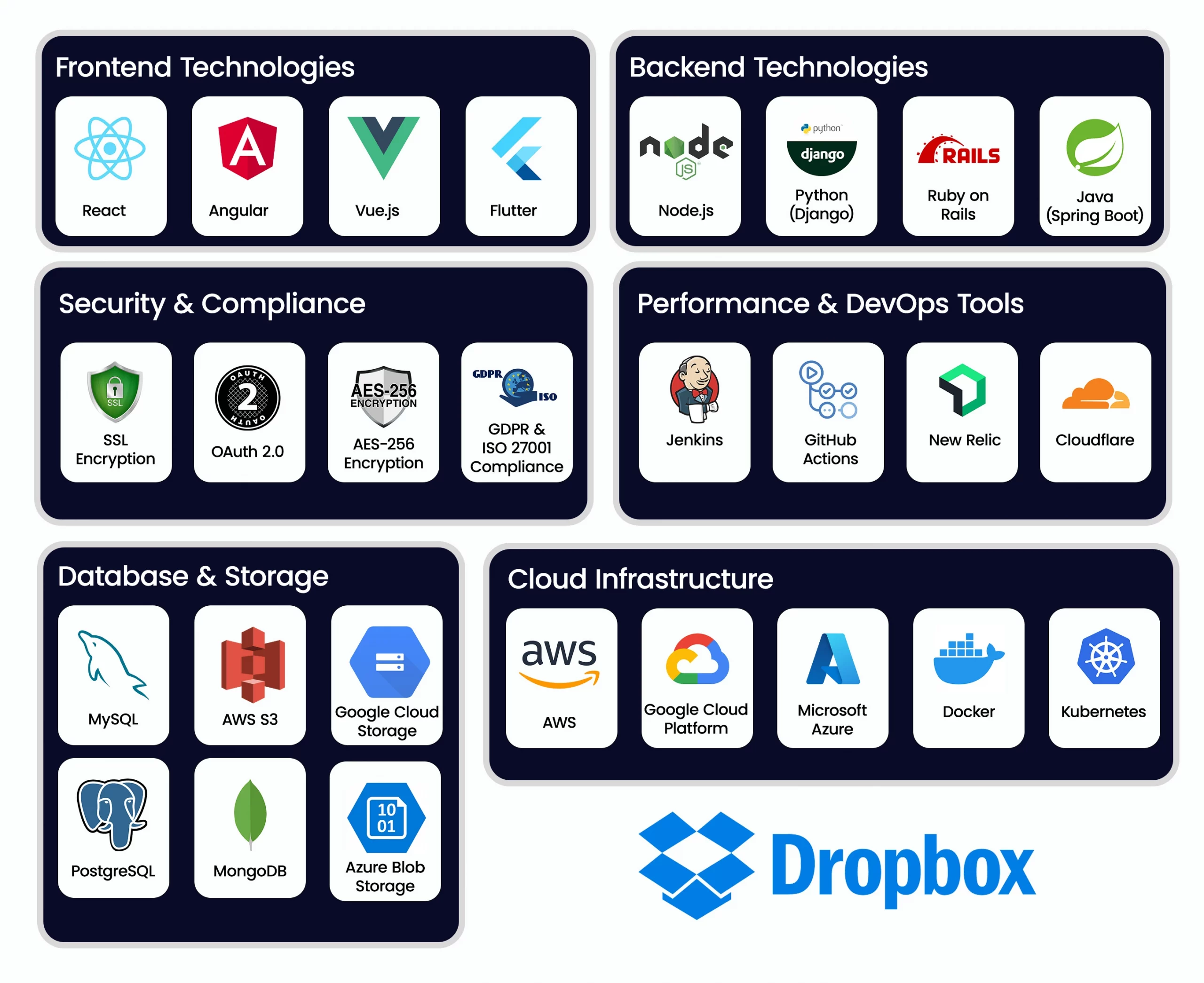
A powerful cloud storage app doesn’t start with design, but it starts with the right tech foundation. The technology stack and architecture you choose will define how your app performs under pressure, scales with demand, and protects user data.
A strong backend ensures smooth file handling, while a reliable frontend guarantees effortless navigation. Together, they form the core experience users expect from Dropbox-like apps.
1. Frontend Technologies
Use frameworks like React, Angular, or Vue.js for a fast and responsive user interface. For mobile platforms, React Native or Flutter ensures consistent performance across both iOS and Android. Thus, making it easier to build a unified experience for cloud app Android users.
2. Backend Technologies
Your backend should handle heavy data transactions and real-time synchronization. A top-notch cloud application development company often leverages technologies like Node.js, Python (Django), or Ruby on Rails to build scalable APIs that connect users to the cloud quickly and securely.
3. Database and Storage
For databases, PostgreSQL, MongoDB, or MySQL work well, depending on your scalability needs. For cloud storage, integrate with AWS S3, Google Cloud Storage, or Azure Blob Storage to ensure data redundancy and global accessibility.
4. Cloud Infrastructure
Use Kubernetes or Docker for containerization and scalability. Pairing them with AWS Lambda or Google Cloud Functions can help optimize costs by automating tasks like file compression and virus scanning.
5. Security Layers
To protect user data, implement SSL encryption, OAuth 2.0, and end-to-end encryption. Regular audits and access control mechanisms ensure that your app meets industry compliance standards like GDPR and ISO 27001.
Read Also: How To Ensure Cloud Application Security- Compromises & Best Practices
How Much Does It Cost to Build an App Like Dropbox?
One of the most common questions every startup founder or entrepreneur asks is, “How much will this actually cost?” Building a cloud storage app like Dropbox is not just about writing code; it’s about creating a secure, scalable, and reliable ecosystem that users can trust with their most important files.
The cost depends on several factors, starting with the complexity of features. A simple MVP with essential functions such as upload, download, sync, sharing, and basic security will cost less than a fully-featured platform with advanced encryption, team collaboration tools, large-file support, and offline mobile access.
Platform choice also matters. Building for Android only will be more cost-effective than a multi-platform approach that includes iOS, web, and desktop clients. However, mobile-first cloud apps, especially on Android, are critical for capturing the growing base of mobile-centric users globally.
Other influencing factors include:
- Backend infrastructure and cloud services: Costs for storage, bandwidth, and server management vary depending on the provider (AWS, Google Cloud, Azure) and the amount of data your app will handle.
- Security and compliance measures: Implementing encryption, secure authentication, and data-residency compliance adds to initial costs but builds long-term trust.
- Design and user experience: A mobile-first interface, especially for cloud app Android users, requires careful UI/UX planning to ensure seamless syncing, sharing, and offline access.
- Development team & region: Costs differ depending on whether you hire in-house developers, outsource, or use a hybrid model. When you hire app developers with proven experience in cloud-based solutions, you gain both technical expertise and faster delivery. Rates still vary by geography and skill level, impacting the overall project budget.
However, the estimated cost for building a basic MVP could start around $100,000, while a full-featured cloud storage app with mobile-first, enterprise-grade features, and multi-platform support can range from $150,000 to $250,000 or more.
Remember, cost is an investment in building trust and reliability. Cutting corners may save money initially, but for a Dropbox-like app, security, performance, and mobile experience are non-negotiable. A smart approach is to start with an MVP development, test it in the market, and then scale gradually as user demand and revenue grow.
Dropbox Business & Revenue Model
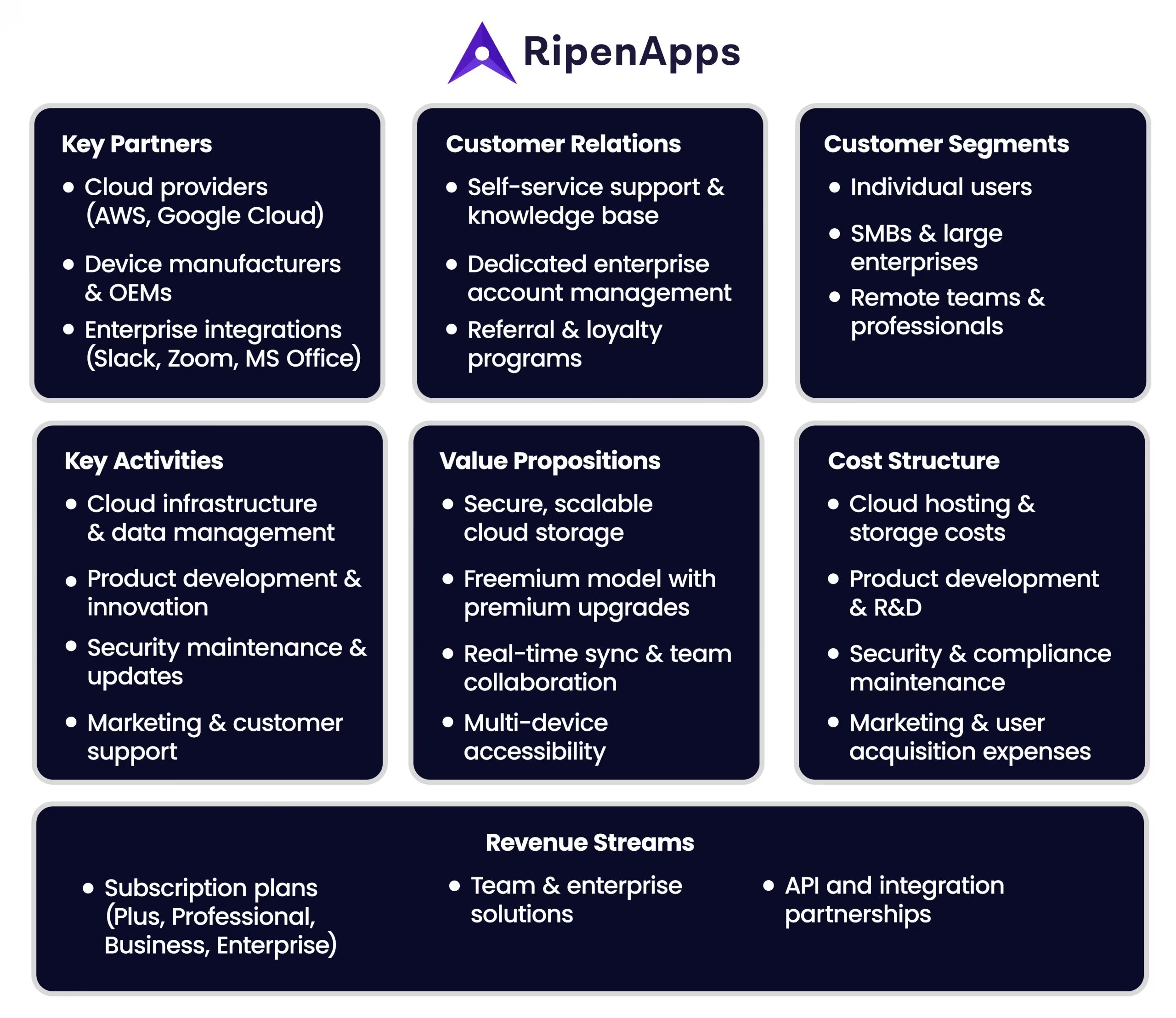
Dropbox didn’t just build a storage app; it built a business around simplicity, trust, and recurring value. Its success lies in offering users what they truly need: secure file access anytime, anywhere, across any device.
The platform runs on a smart freemium model, where free users experience its core benefits and often upgrade to paid plans for more storage, collaboration tools, and advanced security. This mix of user convenience and scalable revenue has made Dropbox one of the most sustainable cloud-based businesses today.
Challenges in Building Dropbox-Like Apps
Creating a Dropbox-like cloud storage app isn’t all about file uploads and downloads. The real challenge lies in managing data securely, syncing it seamlessly, and scaling it without compromising performance. Startups often face hurdles like:
- Data Security: Protecting user files with encryption and compliance-ready cloud infrastructure.
- Real-Time Syncing: Ensuring smooth file updates across devices without lags.
- Scalability: Handling growing data volumes efficiently as the user base expands.
- User Experience: Keeping the interface simple, fast, and intuitive to boost engagement.
Overcoming these challenges takes the right mix of technology, cloud expertise, and user-focused design. However, partnering with a company offering expert product development services ensures your cloud storage app is built with the same reliability and innovation that define successful products like Dropbox.
How an App Development Company Can Help You Build a Cloud Storage Solution like Dropbox?
Developing a Cloud storage solution app like Dropbox demands more than just coding skills. It requires strategic planning, cross-platform expertise, and a deep understanding of user needs. However, a trusted Android app development company with end-to-end app development capabilities can help you design a scalable, secure, and user-friendly solution that performs seamlessly across web, iOS, and Android platforms.
From creating intuitive interfaces to integrating advanced cloud infrastructure and security protocols, a professional team ensures your app delivers the same reliability and smooth experience that users expect from Dropbox-like applications.
Wrapping Up
Building a cloud storage app like Dropbox is more than coding and cloud servers; it’s about creating a platform where users feel confident storing, sharing, and collaborating on their most important files. From seamless file syncing and secure data storage to mobile-first features, every decision you make shapes the trust and convenience your app delivers. By focusing on essential features, reliable architecture, and a smooth user experience, you can offer a solution that not only meets user expectations but also stands out among apps similar to Dropbox.
However, launching your Dropbox-type app requires careful planning, a clear business model, and smart technology choices. Whether you start with a lean MVP or aim for a full-featured platform, your roadmap should prioritize usability, security, and scalability. Moreover, with the right approach, you can capture a loyal user base, optimize your mobile and desktop experiences, and grow your cloud storage platform into a trusted solution that competes with even the largest players in the market.
FAQs
Q1. What makes Dropbox-like apps stand out from other file storage solutions?
Dropbox-type apps stand out because of their seamless synchronization, cross-device accessibility, and strong security layers. Their ability to handle large files, support team collaboration, and maintain consistent performance across devices makes them more reliable for personal and business use.
Q2. How do I build an app like Dropbox for my business?
To build an app like Dropbox, start by defining your core features such as file upload, sharing, syncing, and security. Then, choose the right tech stack, hire an experienced mobile app development company, and build an MVP first to test performance and scalability before full deployment.
Q3. How can I ensure my cloud storage app is secure?
To keep your app secure, integrate SSL encryption, two-factor authentication, and role-based access control. Regular audits, encrypted storage (AES-256), and compliance with GDPR or ISO standards are also essential to build user trust.
Q4. How long does it take to develop an app similar to Dropbox?
Development timelines depend on the feature set and complexity. A basic MVP can take 4–6 months, while a feature-rich, multi-platform cloud storage app may take 8–12 months to develop and fully deploy.
Q5. Can I integrate AI or automation into my Dropbox-like app?
Absolutely. AI can enhance user experience through smart file recommendations, automated folder organization, and predictive storage management. Integrating AI also helps in improving search accuracy, optimizing space usage, and detecting suspicious activity in real time.
SHARE
WRITTEN BY

Ishan Gupta
CEO & Founder
Ishan Gupta is a seasoned entrepreneur and CEO with extensive 8+ years of experience in business and mobile app development landscape. He believes that the right digital product allows companies to focus on what they do best, while technology handles the rest. With deep exposure to global markets, he understands what makes an app succeed. His approach translates business needs into clear product strategies, ensuring that every feature contributes to measurable ROI.
View All Articles