

In the last few years in the USA, digital healthcare has gone from being a “nice-to-have” to a lifeline for millions. From booking virtual appointments to managing prescriptions or tracking mental well-being, users now expect their healthcare apps to work as seamlessly as their favorite social platforms.
There are many leading healthcare apps in the US that have set many benchmarks in the industry by transforming the way people manage their health. They have set a great example of how healthcare mobile apps can work as a billion-dollar business model.
So what separates the top-performing health apps from the rest?
That’s exactly what we’re exploring in this blog. If you are a health tech founder of an aspiring startup, we’ll walk you through the five most successful healthcare apps in the US, unpacking what they’re doing right.
And more importantly, what you, as a HealthTech founder or product team, can learn from them. We’re breaking it all down into real examples and actionable insights you can apply to your next big build.
So let’s dive in and see what these industry leaders can teach us about building health apps that truly make a difference.
Table of Contents
Why Is the Market of Healthcare Apps in the US Booming?
The US healthcare app market is in full-on growth mode. There is a fundamental shift in how people expect to access and manage their health. Patients today want healthcare that fits into their lifestyle, not the other way around. Whether it’s booking an appointment in a few taps, refilling prescriptions on the go, or doing a virtual check-up from the couch, healthcare apps are meeting people where they are.
The rise of chronic health conditions, mental wellness awareness, and aging populations has created demand for continuous, personalized care, not just reactive doctor visits.
At present, hospitals are looking to modernize patient access, and startups want to launch helpful digital healthcare platforms to deliver smarter, safer, and more human-centered digital health solutions. As a result, the demand for custom healthcare app development has become one of the hottest digital investments in the US.
Many health tech founders now want to work with a healthcare app development company to build feature-powered healthcare apps. If you look at the recent mobile app industry statistics, you will observe how rapidly this market is growing.
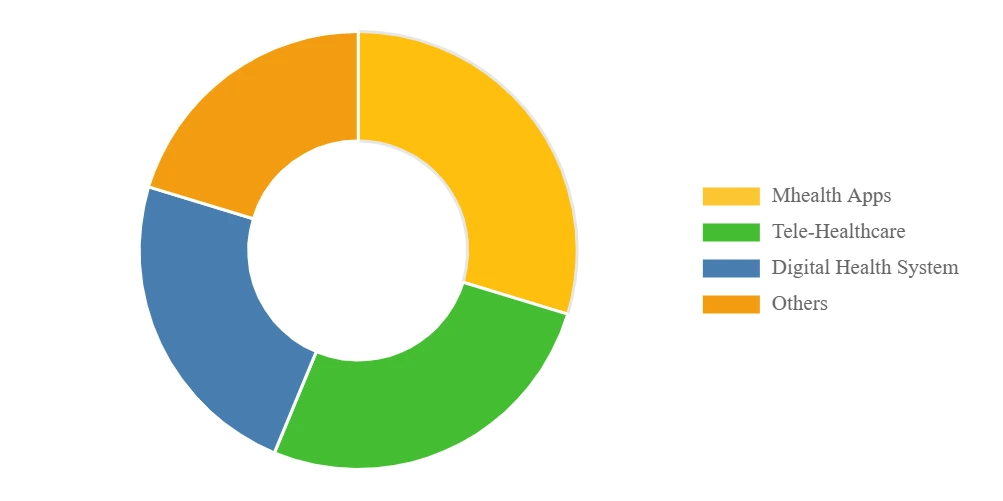
According to the Grand View Research report, the global healthcare mobile application market size recorded USD 114,178.6 million in 2024. And it is now projected to reach USD 107 057 9.8 million by 2030 at a staggering CAGR of 45.2% from 2025-2030.
In the US alone, the digital health market is projected to attain US$297.8 billion by 2033 at a CAGR of 19.3% between 2024-2033. (Source: Custom Market Insights).
Top 5 US Healthcare Apps From Startups Can Learn From
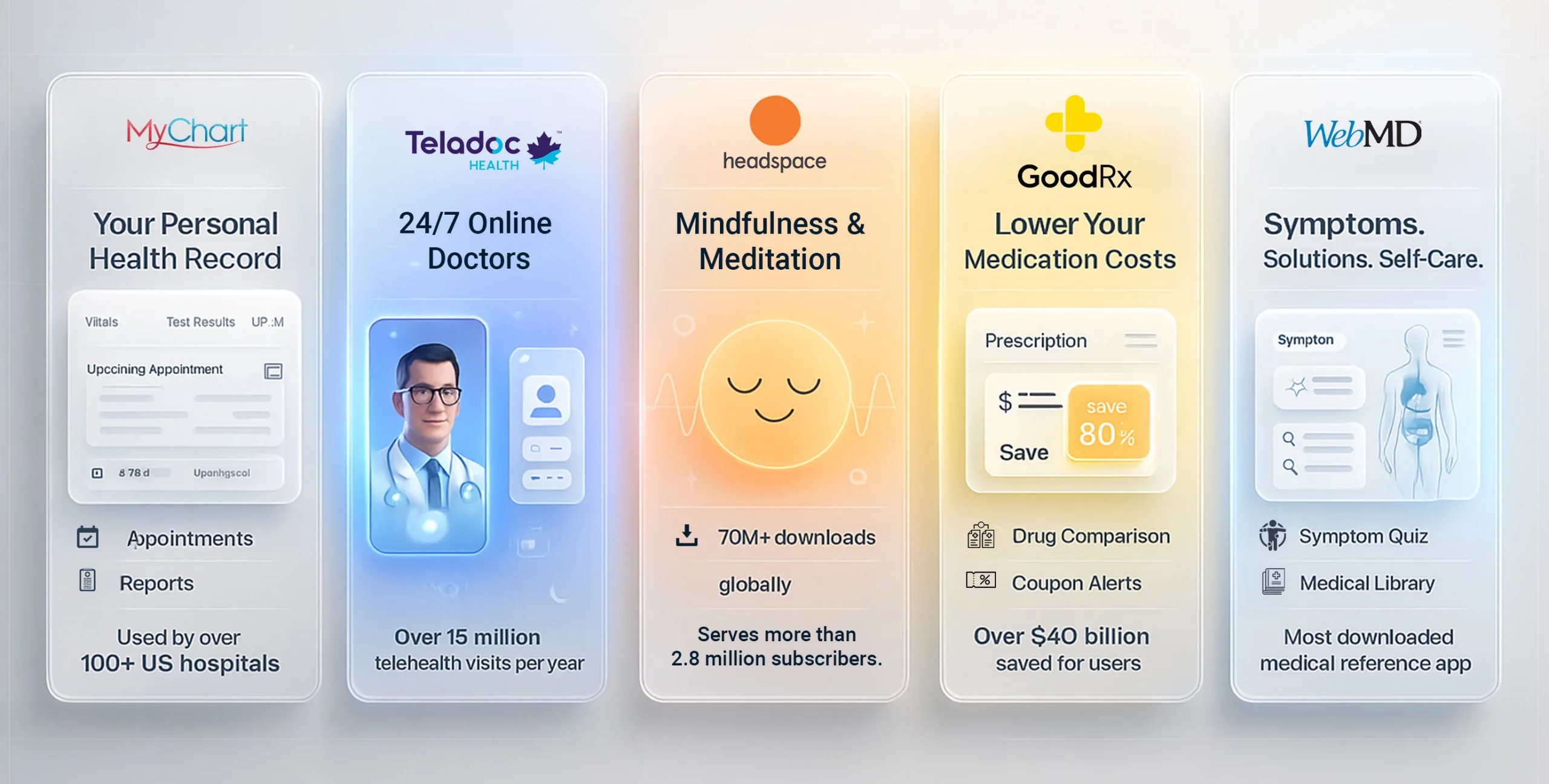
Now, let’s come to our main topic. The US digital healthcare market is getting more competitive. And this growing competition makes it tough for upcoming startups and founders to enter this market and achieve the same success that leading apps have achieved.
Being a top mobile app development company in USA, we know what features and crucial things have played a role in making these apps highly successful in the market. Therefore, to give you a helpful roadmap, we have decoded these apps to give you valuable success lessons and insights.
1. MyChart
MyChart acts as a personal health command center. It allows users to securely access medical records, book or reschedule doctor appointments, view test results, manage prescriptions, and even handle billing — all from a single, user-friendly interface.
It syncs seamlessly with hospital systems, which means patients don’t have to jump through hoops to get their data. Whether you’re preparing for surgery, tracking your vitals, or messaging your doctor directly, MyChart brings every piece of your healthcare puzzle together in one place.
Key Features of MyChart:
- Access to personal medical records
- Appointment scheduling & reminders
- Prescription refills & medication tracking
- Secure messaging with providers
- Lab results & test reports in real-time
Revenue Model of MyChart App
MyChart itself doesn’t generate revenue directly from users. It is typically offered by hospitals and healthcare systems as part of their digital infrastructure. The revenue comes indirectly through enterprise licensing via Epic Systems (the company behind MyChart), which charges healthcare providers for the broader EMR (Electronic Medical Record) platform integration.
Why This App Leads?
What really sets MyChart apart is its deep system-wide integration. It connects with a massive network of hospitals and clinics, making it feel seamless even across different healthcare providers. Plus, it’s backed by names patients already trust, which in healthcare, is everything.
Key takeaway for startups:
If you’re building in this space, the biggest lesson is this: patient data shouldn’t feel like a puzzle. Startups have a huge opportunity to solve for data fragmentation, whether it’s syncing across doctors, systems, or devices. If your product can bring clarity to complexity, you’re already adding value.
2. Teladoc Health
Teladoc Health is one of the pioneers in telehealth and virtual care, giving patients 24/7 access to board-certified doctors, therapists, dermatologists, and other specialists. The app supports audio, video, and text-based consultations and goes beyond general health, covering areas like mental health support, chronic condition management, and wellness coaching. For patients with busy schedules or limited access to care, Teladoc acts as a reliable, always-on doctor’s office in your pocket, with services tailored for both individuals and employers. Due to its unique features, many healthtech startups want to build telemedicine app like Teladoc.
Key Features of Teledoc Health
- 24/7 virtual doctor consultations
- Mental health & therapy support
- Multi-specialty care access
- Chronic condition management tools
- In-app health history & treatment plans
Revenue Model of Teladoc Health
Teladoc operates on a B2B and B2C hybrid model. It charges individual users for virtual consultations, but its major revenue stream comes from partnerships with employers, insurers, and health plans that pay subscription fees to offer Teladoc’s services to their members or employees.
Why This App Leads?
Teladoc nailed scale without sacrificing care quality. Its platform supports multiple specialties, runs smoothly across devices, and meets users wherever they are, especially in rural or underserved areas. It’s not just about video calls; it’s about building a sustainable telehealth ecosystem.
Key Takeaway for Startups:
Whether you’re dreaming of the next big Doctor On Demand app development project or launching a mental health tool, accessibility is key. Your app should be more than digital. It should be dependable, inclusive, and available when it matters most.
3. Headspace
Headspace is a mobile-first platform that makes mental wellness approachable, consistent, and easy to integrate into everyday life. Through guided meditations, mindfulness programs, sleep soundscapes, breathing exercises, and focus tools, it helps users build daily habits that reduce stress, improve sleep, and increase emotional resilience. With sessions tailored to specific needs, Headspace turns abstract wellness goals into tangible and trackable mental health practices for people of all ages.
Key Features of Headspace
- Guided meditation sessions
- Sleep aids & soundscapes
- Mood tracking & daily check-ins
- Mindfulness exercises for stress & anxiety
- Personalized wellness journeys
Revenue Model of Headspace
Headspace uses a classic freemium subscription model. Basic meditations are free, but access to full content requires a monthly or annual subscription. They also earn through corporate wellness partnerships with businesses that offer Headspace to employees.
Why This App Leads?
It wins not because it’s packed with features, but because of its emotionally intelligent UX. Everything about the app feels calming, friendly, and human. It encourages daily habit formation in a way that doesn’t feel forced.
Key takeaway for startups:
This is a gold standard in user-centered design. Whether you’re working with a UI UX design agency or building it through your own team, you should try to design for how people feel, not just what they need to do. Emotional connection is what keeps users coming back.
4. GoodRx
GoodRx helps users navigate the often-confusing world of prescription drug pricing. It is among the leading HIPAA-compliant apps in the US. It lets patients search for medications by name, instantly compare prices across local pharmacies, and access coupons and discount codes to lower their out-of-pocket costs. The app’s real-time pricing data and location-based suggestions make it possible to save hundreds of dollars with zero paperwork or insurance hassle.
Key Features of GoodRx
- Real-time prescription price comparison
- Pharmacy discount coupons
- Medication search with location filters
- Drug info & side effects database
- Prescription savings tracker
Revenue Model of GoodRx
GoodRx makes money mainly through affiliate and referral commissions. When users redeem prescription coupons at partner pharmacies, GoodRx earns a fee. It also monetizes via advertising, sponsored listings, and a premium subscription (GoodRx Gold) that unlocks deeper discounts and benefits.
Why This App Leads?
Its success comes down to two things: simplicity and impact. The app doesn’t try to be everything. It focuses on users, paired with a clean UI, making it one of the most practical apps for healthcare today.
Key Takeaway for Startups:
Don’t overbuild. Sometimes, the most powerful idea is the most focused one. If you’re entering the health space, solve one real, urgent problem and solve it beautifully.
5. WebMD App
The WebMD app acts like your pocket doctor — offering access to reliable medical content, a smart symptom checker, personalized health tips, medication tracking, and even a database of local healthcare providers. It’s designed for patients who want to better understand their symptoms before heading to the clinic. From allergies to chronic conditions, it provides explanations, treatment options, and follow-up advice — in plain English. For many users, it’s the first step toward informed decision-making in a confusing healthcare world.
Key Features of WebMD
- Symptom checker tool
- Trusted medical articles & health tips
- Pill identifier & medication info
- Condition-specific content
- Doctor & provider directory
Revenue Model of WebMD App
WebMD runs primarily on an ad-based model, leveraging its massive traffic and content reach. It generates revenue from sponsored health content, pharmaceutical ads, and brand partnerships. In some cases, it also monetizes through lead generation for clinics, trials, or treatment centers.
Why This App Leads?
The WebMD app leads because it combines trust, credibility, and ease of access. It gives users a sense of control, helping them make more informed decisions before rushing to the doctor or pharmacy. It also benefits from years of brand familiarity and content authority.
Key Takeaway for Startups
Information is powerful, but how it’s delivered matters just as much. Think content strategy, intuitive navigation, and personalization. An expert mobile app development company USA will tell you: content and tech should speak the same language.
Common Themes Behind Their Success
When you look at the leading healthcare apps in the US, it’s easy to assume their success is all about big budgets or early market entry. But dig a little deeper, and you’ll find a much more intentional formula at play — one built on user trust, clinical credibility, and design that puts people first. Here’s what these top-performing apps consistently do right and what every healthtech founder or product team can learn from them:
1. Offering Seamless and Personalized Experience
The best healthcare apps feel intuitive the moment you open them — but that doesn’t mean they’re simple behind the scenes. What they do really well is combine clean, frictionless UX with real medical depth. This kind of design thinking is especially important if you’re planning a healthcare mobile app, because your users might be stressed, in a rush, or not tech-savvy.
2. Ensuring User Privacy At Core
For the leading healthcare apps for patients, data privacy is a high value proposition. Apps like Headspace and MyChart make users feel in control of their data, not afraid of it. From transparent permission prompts to encrypted messaging, privacy is something these apps actively communicate, not just hide in legal disclaimers.
3. Built For Future
These apps are designed for scale. They aren’t just “launched and left.” They’re continuously evolving, updating, and optimizing for new users, features, and partnerships. Whether it’s Teladoc onboarding thousands of new users overnight or GoodRx adapting to nationwide pricing data, these platforms run on high-end infrastructure.
They use modular codebases, secure APIs, and robust cloud environments — all of which make them future-ready. However, for this, you will have to work with a custom app development company to make sure scalability is part of the early architecture, not a fix you scramble for later.
4. Designed with People-First Approach
What really separates the best healthcare apps for doctors and patients alike is that they’re thoughtful. Take Headspace, for example. Its entire user experience feels like it was built by someone who gets mental health. It’s tech-enabled, sure, but it’s emotionally aware.
In today’s market, personalization is the baseline. From condition-specific content in WebMD to tailored care journeys in Teladoc, these apps know how to make users feel seen, heard, and supported.
Emerging Features Reshaping the Future of Health Apps in US
Healthcare apps in the US are leading the market. And with growing technology innovations and user expectations, the demand for next-gen healthcare apps is also opening new scope. If you are planning to build your own healthcare app, you must adapt emerging features that are going to shape the future of healthcare apps in the US. Here are four emerging features that are quickly shifting the future of healthcare mobile experiences, and why startups, founders, and product teams should be paying close attention:
1. Smart Healthcare with AI
Gone are the days when users only opened a health app to check their step count. Today, AI-powered symptom checkers and diagnostic tools are stepping in as the first point of care, helping users make informed decisions without waiting weeks for a doctor’s visit.
Apps now use machine learning to assess symptoms, flag red flags, and recommend next steps — all based on real-time inputs and medical databases. AI in healthcare app development is evolving as a powerful combination to offer more advanced healthcare. In addition to this, healthcare organizations can also seek dedicated AI chatbot development services to automate a communication system for instant help.
Read Also : How AI in Healthcare Apps Can Help You Enhance Patient Care?
2. Voice-Enabled Interfaces
Voice is the quiet revolution in mobile health. Imagine logging symptoms, requesting medication refills, or asking for mental health support. All of this can happen without lifting a finger. From Alexa integrations to in-app voice AI, this feature is bridging the gap between convenience and care. A leading healthcare app development company is leveraging this feature as a massive opportunity to design apps that don’t just work for everyone, but feel effortless for everyone.
Read Also : Top Healthcare Mobile App Development Trends Businesses Can’t Ignore
3. Real-Time Health Coaching
Healthcare apps in the USA are now integrating live wellness experts, nutritionists, therapists, and even AI coaches that respond to user inputs in real time. This is especially powerful in areas like chronic condition management, weight loss, or post-surgery recovery, where progress depends on consistency and encouragement, not just information.
Companies and health tech businesses are leveraging IoT in healthcare app development to build such real-time connected healthcare ecosystems that respond dynamically to users’ needs.
4. Wearables + EHR Integration
Today’s most forward-thinking apps are focusing on interoperability — syncing data between wearable technology, smart devices, and Electronic Health Record (EHR) systems. This allows for a 360-degree view of a patient’s health, without endless manual inputs. For users, this means fewer forms to fill out, smarter insights, and more personalized recommendations. For providers, it means more accurate data and better care planning.
Final Thoughts
If there’s one thing the top healthcare apps in the US prove, it’s this: great health tech about how people feel when they use it. These apps work because they’ve earned users’ trust by delivering value, ease, and empathy. And for HealthTech startups? That’s the blueprint.
Start small, but start with intention. Solve one real problem well. Design for humans first. Learn from what these apps have done right. Take the insight and build something that gives real value to users.
But since the US digital healthcare market is getting more competitive, it requires great expertise and industry knowledge to build a healthcare app that satisfies today’s evolving market needs. And this is where RipenApps stands out as a perfect tech partner who can assist you in developing a market-ready healthcare app for the US people.
FAQs
Q1: Which sectors are benefitting most?
Nearly every sector is experiencing growth and benefits from the power of mobile apps. However, in recent times, the food and restaurant, education, and retail industries saw the highest growth.
Q2: Do you provide assistance after launching the project?
Yes, we provide assistance after launching the project. Our team continuously provides maintenance and support for your application so that it stays competitive in the market and works bug-free.
Q3: What will be the future of mobile application development industry?
The future of the mobile application development industry will keep achieving exponential growth. In the coming years, AI will be the central part of every project where businesses target building intelligent applications.
Q4: What is the revenue of the mobile app industry in 2024?
In 2024, the revenue of mobile apps is projected to reach 522,172 million U.S. dollars worldwide.
Q5: Are these healthcare apps HIPAA compliant?
Yes — all leading healthcare apps in the US are HIPAA compliant by default, especially those handling patient data, prescriptions, or provider communication. Compliance is non-negotiable if you want to build user trust and operate legally.
SHARE
WRITTEN BY

Ishan Gupta
CEO & Founder
Ishan Gupta is a seasoned entrepreneur and CEO with extensive 8+ years of experience in business and mobile app development landscape. He believes that the right digital product allows companies to focus on what they do best, while technology handles the rest. With deep exposure to global markets, he understands what makes an app succeed. His approach translates business needs into clear product strategies, ensuring that every feature contributes to measurable ROI.
View All Articles