

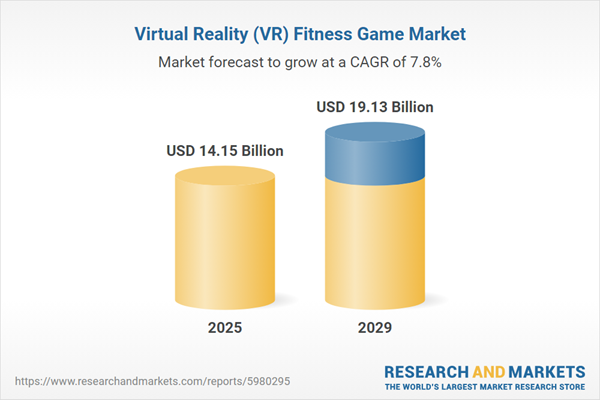
Fitness businesses that rely on traditional workouts face a striking challenge: disengagement. Studies show that up to 40% of fitness subscribers drop out within a year, resulting in significant churn and lost recurring revenue. Meanwhile, the global VR fitness game market is experiencing rapid growth, projected to increase from $13.08 billion in 2024 to $14.15 billion in 2025, as users demand interactive, social, and genuinely enjoyable workouts. That’s why businesses need to invest in an AR VR fitness app to attract and retain a new generation of tech-savvy clients.
AR and VR are rewriting the rules of interactive fitness. These technologies turn every session into an immersive experience, offering real-time feedback, personalized motivation, and game-like challenges. Instead of static routines, AR and VR give members engaging, adaptive workouts that result in higher engagement and build a community that feels connected to the fitness platform.
The message is clear for business owners: Investing in an AR VR fitness app today can help you lead tomorrow’s market. These technologies drive loyalty, unlock new revenue streams, and set your brand apart from others. But there’s more to uncover, and this blog can help you understand the role of AR and VR in shaping the future of interactive fitness training.
Table of Contents
Key Statistics on AR/VR Fitness Market
The global fitness industry is experiencing a powerful transformation, driven by the rapid adoption of Augmented Reality (AR) and Virtual Reality (VR), two of the major mobile app development trends. As consumers expect more interactive and entertaining workout experiences, the market value of virtual fitness solutions continues to surge. The global VR fitness app market is projected to reach $19.13 billion in 2029, while AR/VR adoption in fitness is expected to grow at a CAGR of 6-8% over the next several years.
A growing share of users are Millennials and Gen Z, with studies showing over 55% of digital fitness consumers in the 18-34 age group eager for immersive experiences. North America, Europe, and the Asia-Pacific regions are showing the increased use of AR VR fitness app.
Several popular brands and startups already making their mark are Supernatural and FitXR. They offer highly-rated VR fitness apps with immersive boxing, dance, and HIIT classes. Within the augmented reality fitness app landscape, companies like Zwift and Holodia are redefining indoor cycling and rowing with real-time races and virtual environments.
The Impact of AR VR Fitness App
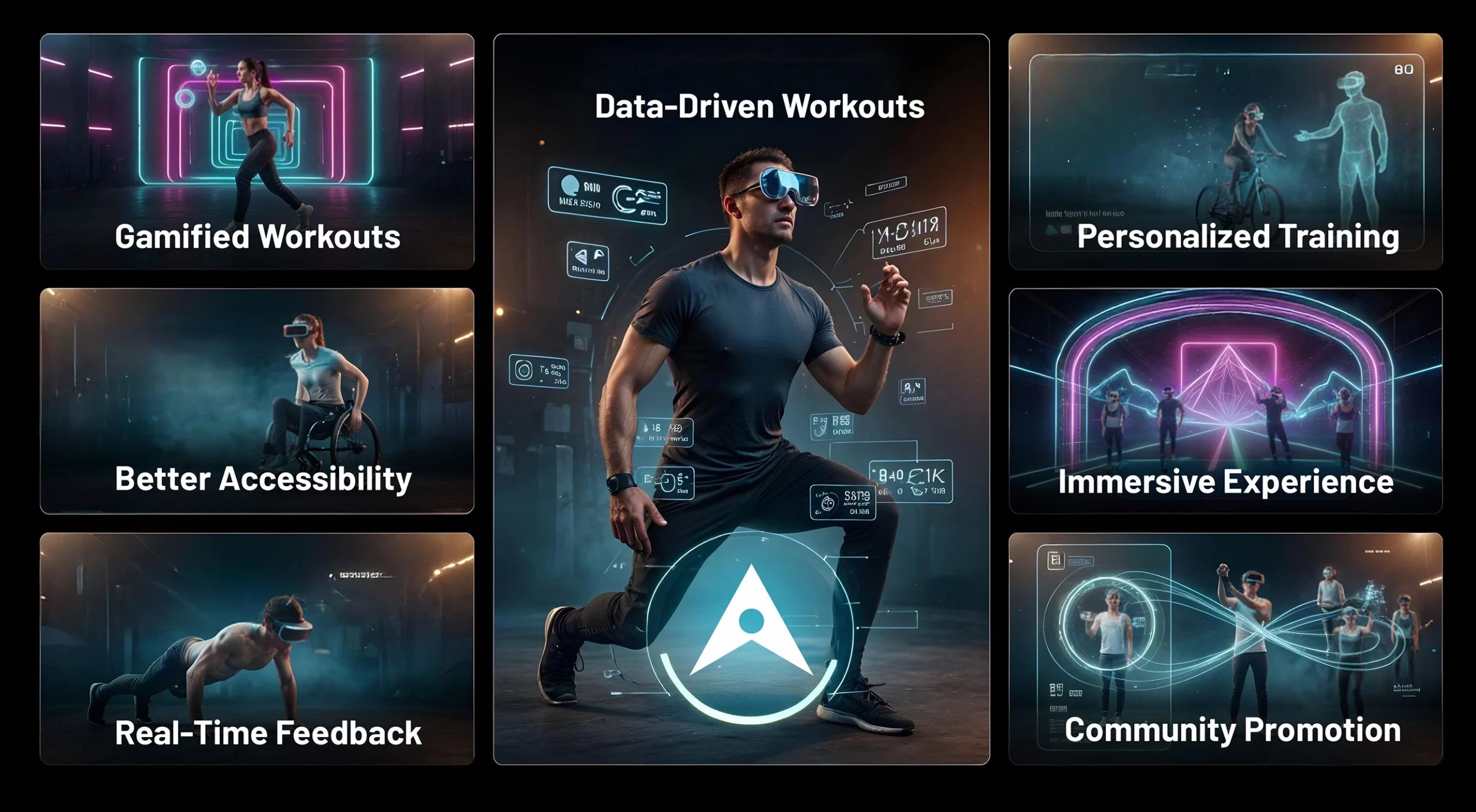
Now, you don’t need to work through the same old workout routine because AR/VR has introduced gamification workout apps to make workouts fun, effective, and totally immersive. Let’s dive into how the AR VR fitness app improves health:
1. Gamified Workouts To Motivate Users
Augmented reality and virtual reality fitness apps are transforming exercises into interactive games. This gamification keeps users engaged, promotes healthy competition through fresh challenges, and makes exercising a fun activity.
These gamification workout apps, one of the top future-ready fitness app ideas, allow users to earn points for completing exercises, unlock badges for achieveing milestones, and receive virtual rewards for continuous efforts.
Some of the best VR fitness apps gamify workouts, and they act as a powerful motivator. Furthermore, it opens opportunities for building advanced apps to deliver more immersive workout experiences.
2. Personalized Training For Better Health
The fitness landscape is undergoing transformation with the AR VR fitness app. These fitness VR apps are not only creating exciting workout experiences but paving the way for a better era of personalized training.
This personalized feedback improves health by maximizing results and avoiding injury. A VR exercise app puts you in a virtual gym with a holographic personal trainer, giving you the feel of a gym within your house.
On the other hand, AR fitness apps overlay virtual markers on your body, providing real-time feedback on your posture and movement range, allowing you to tailor your workout as per your preference.
3. Data-Driven Workouts For Routine Management
AR and VR fitness apps can track real-time data like heart rate, calories burned, and movement range.
Looking at the number of health issues, this could be a boon for users. In the current time, people look for data-driven workouts because they can help them make exercise routines that are personalized and optimized based on their performance metrics.
It also shows that people are shifting from generic workouts to personalized workouts for better results, increasing the demand for top VR apps for fitness.
4. Better Accessibility To Reach Wider Audience
Fitness isn’t limited to expensive gym memberships or specialized equipment. With a fitness app, users can access a wide range of augmented reality fitness workouts, whereas fitness VR apps erase the line between the digital and real world, making fitness convenient.
These technologies transform your surroundings into an interactive studio where you can work out without any hesitation. This accessibility is unique, allowing users to do workouts anywhere at any time.
As a result, augmented reality and virtual reality fitness apps are embracing a convenient and personalized fitness journey to reach a wider audience.
5. Real-Time Feedback & Monitoring
Every AR VR fitness app provides real-time feedback about body posture, technique, and performance during workouts. This immediate feedback allows users to take steps in the right direction, such as improving posture, improving their workouts, and saving themselves from any injury.
Apart from that, these apps enhance accountability and motivation by providing transparent progress tracking and personalized guidance, making fitness goals more rewarding.
6. Improved Immersive Experience
When it comes to AR and VR in fitness, they’re constantly elevating user engagement by creating immersive surroundings where people can have fun during exercises. As businesses have understood that it isn’t only about fancy illustrations, it’s about an engaging experience, eventually helping users to reach their fitness goals.
7. Community Promotion & Social Interaction
You can foster community and social interactions easily, as it’s one of the main impacts of using AR and VR apps in the fitness industry. These technologies allow fitness apps to create an environment where users can take classes together or do challenges together, regardless of their physical presence. Although there are several development challenges involved, if done right, it can help users interact with each other through avatars, chat functionalities, and foster a sense of fellowship and support.
Why Businesses Should Build an AR VR Fitness App?
Now that you know about the health impacts of an AR VR fitness app, it’s important to understand why businesses should invest in building an AR/VR fitness app to achieve success in the industry. So, let’s get started:
1. Higher Customer Retention Through Engaging Experiences
AR and VR technologies transform traditional workouts into immersive adventures that keep users motivated and returning regularly.
Leading VR fitness apps leverage gamification to make exercise feel like play, improving habit formation. In fact, fitness VR apps with interactive gaming elements report higher engagement and retention than conventional fitness apps.
Gamification workout apps encourage competition and reward progress in real time, converting users into loyal customers who spend more time and money with the brand. Partnering with a leading AR VR app development company can help you achieve higher customer retention.
2. New Revenue Streams For Maximum Benefits
Companies can generate income from immersive technology by providing premium content on AR and VR exercise apps on a subscription basis.
These apps integrate virtual personal trainers and offer group sessions, as well as social fitness competitions, to be held in branded virtual gyms or expansive AR fitness spaces. This provides a shift from traditional studios to fitness virtual reality and creates scalable revenue streams without location limitations.
Both new and established companies are taking advantage of this opportunity by creating fitness VR apps with memberships, pay-per-class, and in-app purchase options, broadening their revenue streams.
Read Also: How Can Integration of AR/VR in Mobile Apps Increase Customer Engagement?
3. Save Your Valuable Money
Fitness businesses that adopt virtual reality fitness programs stand to greatly reduce the capital expenses tied to physical gyms, such as real estate, gym equipment, and local staff.
Trainers no longer need to travel to designated physical gyms, since AR and virtual reality gyms let them deliver sessions to any device, preserving the quality of the exercises and training while expanding the audience.
This is particularly effective in metropolitan areas, where the prices of commercial and office spaces are high. Leading best fitness VR apps have shown how immersive innovation can disrupt costly fitness center models while expanding customer reach effectively.
You can save your money during app development as well. Instead of building separate virtual reality and augmented reality for Android and iOS, you can choose cross-platform development to save money and launch on both platforms.
4. Improved Data-Driven Personalization
AR/VR platforms collect detailed workout data to personalize fitness regimens in real time, optimize performance, and promote adherence. This is a key feature of top VR fitness apps and augmented reality fitness apps, enabling businesses to personalize experiences uniquely to user needs while driving deeper engagement and loyalty.
5. Competitive Differentiation And Brand Insights
Integrating advanced AR and VR solutions into the fitness product suite signals innovation and positions brands as industry leaders. A gym equipped with a fully immersive virtual reality experience or a gym partner augmented reality fitness app is a unique selling point that a company can use to set itself apart in the market.
The best VR fitness applications are designed with both fitness and technology enthusiasts in mind, thus enabling companies to tap into emerging markets.
Companies that choose to ignore this trend will eventually become obsolete due to the changing consumer expectations. So, partner with an experienced Fitness app development company to build an advanced fitness app, leveraging this trend.

Real-Life Examples of AR/VR Fitness Apps Improving Workout Experiences
With an AR VR fitness app, fitness training has become an engaging and immersive fitness experience that goes beyond traditional routines. Here’s a look at some AR/VR fitness apps that are transforming workouts:
VR Fitness Apps
1. Supernatural – Workouts in Breathtaking Virtual Worlds
Supernatural combines guided workouts with VR headsets like Oculus Quest. Users can choose scenic locations such as cliffs, mountains, or beaches, while real trainers lead high-intensity cardio or yoga. This application offers:
- Immersive environments to reduce workout fatigue
- Music integration to boost motivation
- Personalized coaching to keep users consistent
2. FitXR – Gamifying Fitness
FitXR gamifies exercise by offering boxing, HIIT, and dance workouts in virtual studios. Users earn scores, track progress, and even compete with others in real time. This app is popular because it offers:
- Multiplayer options to add social motivation
- Game-like scoring to keep workouts fun
- Variety ensures long-term engagement
AR Fitness Apps
1. ARX Trainer – Smarter Strength Training
ARX Trainer uses adaptive resistance technology enhanced by AR visuals. The machine automatically adjusts resistance based on a user’s strength and performance.
Why is it famous?
- Real-time feedback ensures balanced training intensity
- AR tracking provides clear progress insights
- Helps users avoid overtraining or injury
2. Zombies, Run! – Making Running Exciting
Zombies, Run! is an AR-based fitness app that turns jogging into a survival adventure. Users complete missions, collect supplies, and sprint when zombies chase them through audio and AR prompts.
Why is it famous?
- Story-driven workouts create a sense of urgency
- Gamified running boosts consistency for outdoor workouts
- Appeals to both beginners and seasoned runners
Read Also: How to Monetize Health & Fitness Apps in 2025: Trends, Models & Insights?
Final Thoughts
The fitness industry is changing at an unprecedented pace. AR and VR technologies are at the centre of this transformation, revolutionizing workouts from monotonous routines into immersive workouts. However, this is just the beginning.
AR VR fitness app continues to evolve, opening new possibilities for businesses to establish a strong foothold in the health and wellness industry. However, building a mobile app using these advanced technologies isn’t an easy task.
It requires years of experience and proven expertise. That’s when RipenApps can be your reliable partner. We have skilled mobile engineers who can help you develop a future-proof AR VR fitness app that will drive significant growth.

FAQs
Q1. What motivates companies to adopt AR/VR fitness solutions?
Seeing how augmented reality is reshaping the travel & tourism industry, fitness businesses are planning to invest in these solutions. Capturing this segment early offers a competitive advantage to companies. Apart from health-conscious users, businesses can target traditional fitness users. Alongside fitness app subscriptions, partnerships with equipment vendors and digital content creators present additional revenue avenues.
Q2. What are the business opportunities for AR and VR fitness?
The AR/VR fitness solutions present business opportunities for home fitness, gym, corporate fitness, and physical therapy sectors. The companies stand a chance to tap into the B2C market with subscription-based applications and to the B2B market with gyms, physical therapy centers, and corporations with employee wellness programs.
Q3. What is the revenue generation strategy for AR/VR fitness apps?
AR/VR fitness apps can generate revenue through:
- A monthly or yearly subscription fee
- In-app purchases for special workouts or virtual environments
- Integration with VR headsets or smart fitness equipment
- Corporate wellness program sponsorships
- Advertising and branded collaborations
Q4. What are the key challenges associated with developing AR/VR fitness applications?
Key challenges are high initial development costs, hardware adoption barriers, motion-sickness concerns, and continuous content updates to keep users engaged. You can hire app developers with years of experience to reduce risks and ensure smoother market entry.

SHARE
WRITTEN BY

Ishan Gupta
CEO & Founder
Ishan Gupta is a seasoned entrepreneur and CEO with extensive 8+ years of experience in business and mobile app development landscape. He believes that the right digital product allows companies to focus on what they do best, while technology handles the rest. With deep exposure to global markets, he understands what makes an app succeed. His approach translates business needs into clear product strategies, ensuring that every feature contributes to measurable ROI.
View All Articles