

Ever since its inception, AI has been transforming everything, including Android. It has become a new core of the operating system. With over 3.9 billion active Android devices around the globe, it is the world’s largest mobile ecosystem. But the next big leap of Android is all about intelligence. Google’s long-term investment in AI is reshaping the future of Android in real-time.
Google has introduced the Tensor G3 chip in the Pixel 8 Pro smartphone to run more AI models directly on the device, enabling features like real-time call screening, on-device translation, and context-aware voice commands. Similarly, voice assistants like Google Assistant and Gemini are becoming more conversational and personalized with Gen AI capabilities.
This signals a massive opportunity for businesses and app developers. From health apps to travel apps, AI is set to take mobile experiences to a whole new level. In this blog, we’ll explore how the future of Android app development will evolve alongside AI, what the current landscape looks like, and what the future holds. We’ll also focus on how AI-infused apps and next-gen voice assistant for Android are changing the rules for mobile engagement. So, let’s jump right in:
Table of Contents
Future of Android? Let’s Start With Android Evolution
We are currently on the 15th version of Android. Launched in 2008, the operating system has captured more than 70% of the global market. Earlier, AI wasn’t a primary focus, but today, artificial intelligence is at the forefront, shaping the answer to the big question: what is the future of Android? Over the past five years, the interest in artificial intelligence has surged globally.
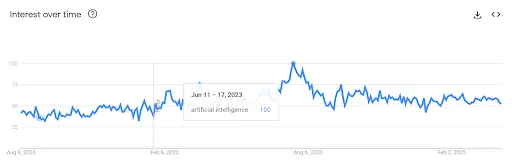
Today, Android is on its sixteenth major update, Android 16 (codenamed Baklava), which rolled out officially on June 10, 2025. This version has introduced users to many Android AI apps and features, including on-device scam call detection, real-time lock-screen updates, and enhanced multitasking modes for tablets. Seeing AI shaping the future of Android application development, custom Android app development companies with AI expertise are high in demand.
The June 2025 Pixel Drop introduced AI-native experiences like Gboard stickers, Pixel VIPs widgets, enhanced accessibility tools, and AI-powered editing in Google Photos, which prove that AI is crucial for the future enhancement of Android OS.
Talking about virtual assistants, the market for intelligent virtual assistants is projected to reach $14.10 billion by 2030, with a CAGR of 24.3% from 2023 to 2030.
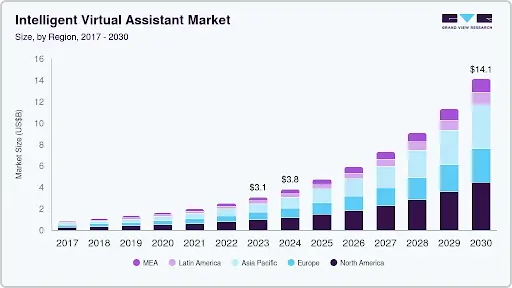
Google Assistant is one of the most popular virtual assistants, commanding a 46% share of the global intelligent virtual assistant market. The growth of these virtual assistants has inspired startups to invest in chatbot development for fast growth. (Source)
Few Examples of AI-infused Android Apps
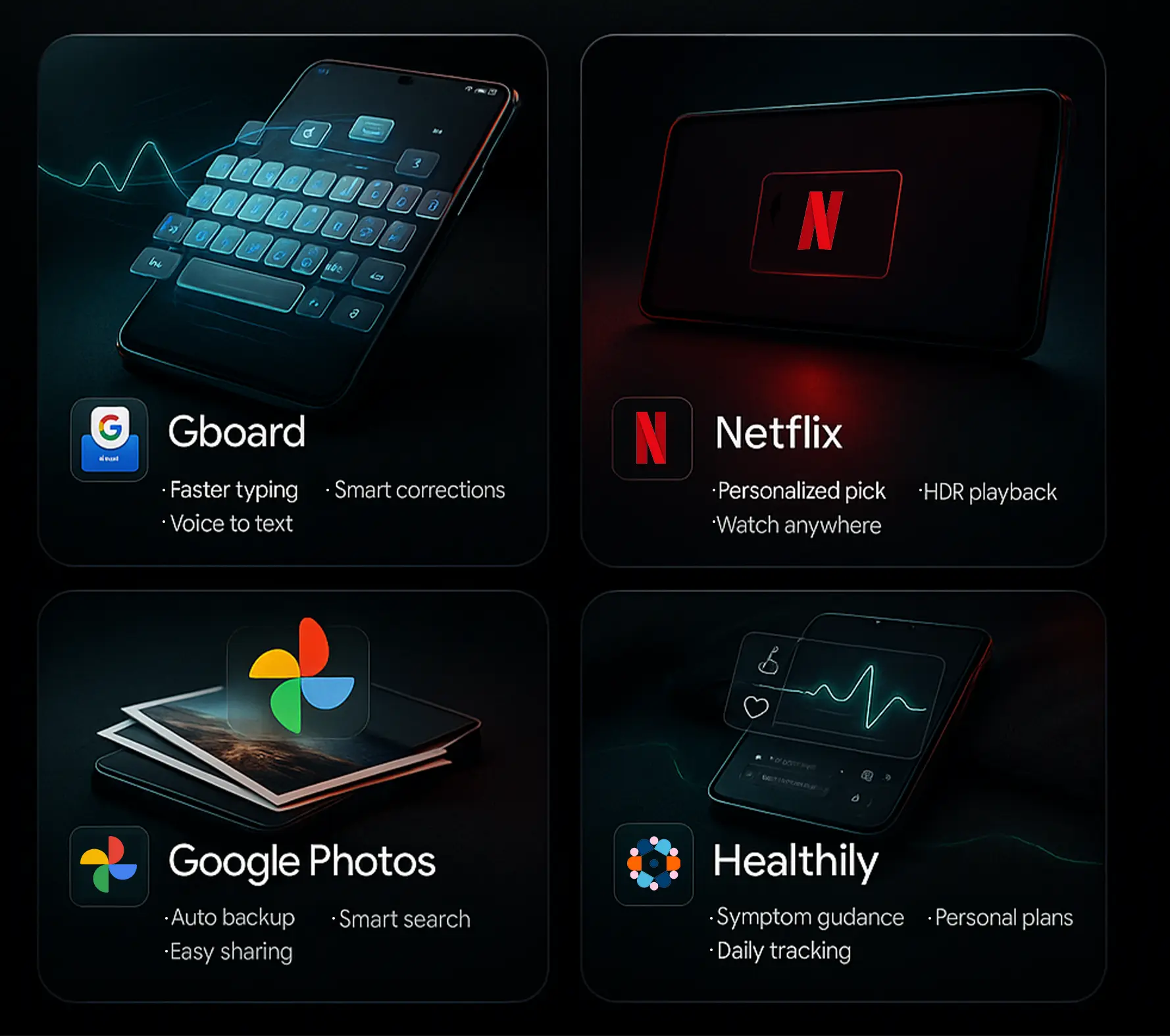
If we want to study the role of Artificial Intelligence and machine learning in Android applications, the best way would be to take some live examples. Many Android apps, including educational tools and the best ai personal assistants, are making waves in the market. Let’s take a look at the top 5 Android apps using the power of Artificial Intelligence.
1. Gboard’s Predictive Analysis Algorithms
Google’s Keyboard is one of the intelligent keyboards on the Play Store. On average, a user is 25% slower on a mobile device as compared to a physical keyboard. After using AI for Android, Gboard has helped users to stay productive even on mobile devices.
The keyboard deliberately predicts the intended words rapidly with accuracy from its Neural Spatial Models. It even maps the errors while performing swipe typing, allowing users to type with fewer mistakes.
2. Netflix’s Recommendation System
The global OTT giant and one of the most popular Entertainment applications on the Google Play Store, Netflix, also shines in infusing AI into its application. The recommendation system of Netflix has been a topic of research for a long time, and the company is continuously applying innovative machine learning algorithms to make it the best Android AI application in the entertainment category.
For users. The recommendation system offers personalized suggestions to reduce the amount of time and frustration to find great content to watch.
Read Also: An Exclusive Netflix App Development Guide
3. Google Photos- AI-infused Features
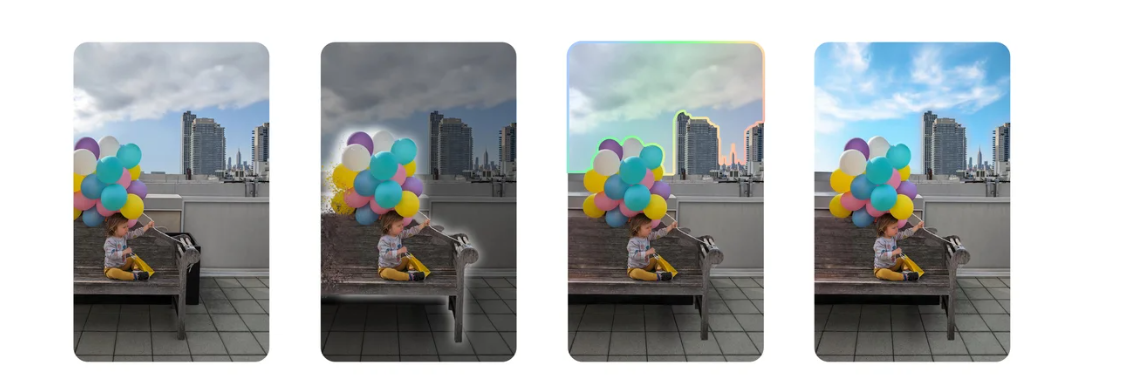
Another prime example of rich Artificial Intelligence is Google Photos. Recently, the company bought Magic Editor for their photo app, showcasing a strong focus on the AI-infused application. After including the Magic Editor feature, the Google Photos app has increased its user base because users get advanced editing features without installing an extra app.
Look at the example below of how AI created a portion of the bench in the photo. Other features like Photo Unblur are also strong examples of AI-infused applications helping us determine the future of Android.
4. Healthily- Intelligent Tracking
AI is playing a key role in sports and fitness apps too. Healthily is a great example of intelligent tracking. The application tracks the symptoms of users and suggests possible remedies through an AI assistant for Android version to keep their health in the optimum phase. For professionals and busy individuals, pairing such health apps with an executive VA ensures that fitness goals and wellness reminders are managed alongside daily tasks without missing a beat.
All of it has been possible through intelligent algorithms. Today, the application has more than 1 million downloads and has an excellent 4.2-star rating.
Voice Assistants and Android
Moving ahead to one of the most popular domains in artificial intelligence, Google has always dominated the voice assistant landscape. Apple and Amazon are the other two most popular voice assistant apps for Android and iOS.
The present landscape of Android voice assistants is marked by significant progress. They can perform a wide range of tasks, from setting alarms and sending texts to answering questions and controlling smart home devices.
The integration of voice recognition and synthesis technologies has made interactions with these assistants increasingly natural and human-like. They can even understand context, allowing for more complex conversations. Google is the best voice assistant for Android, helping users with their preferred information. Businesses can partner with an experienced Android app development company to build the best voice assistant for Android.
Future of Android with Voice Assistants
The integration of AI and machine learning is pivotal for the future of Android voice assistants. As these technologies continue to advance, AI voice assistants for Android will become even more adept at understanding user preferences, habits, and even emotions.
This will pave the way for hyper-personalized interactions, such as suggesting music based on your mood, offering restaurant recommendations that match your tastes, or providing emotional support when needed. Businesses need to invest in AI development services to leverage the benefits.
In the coming years, we can expect the best AI voice assistant for Android to evolve beyond mere voice interaction. Visual recognition and augmented reality capabilities are already being explored, allowing users to point their device’s camera at objects, text, or scenes and receive information or assistance. Now, you can ask your personal assistant app about landmarks, and it will identify them in real-time using your camera.
A key Concern with Voice Assistants
Privacy and security will remain paramount concerns for Android voice assistants or any AI personal assistant app. With the increasing reliance on these digital companions, safeguarding personal data and ensuring secure interactions are of utmost importance.
Users can expect more transparent controls over data usage and improved methods for ensuring their privacy. To cope with privacy and security, you will need to hire app developers to build your AI-infused app.
Key Development Area for Voice Assistant
One of the key areas of development for Android voice assistants is improved contextual understanding. Building an app like ChatGPT with an infused voice assistant can be a great app idea because it could be the best AI assistant for Android. ChatGPT is the best AI for personal use and professional use. AI softwares like this is better at remembering the context of previous questions or requests, which enables more coherent and intuitive conversations.
This advancement opens doors for increased personalization, as some of the best personal assistant apps or voice assistants can provide more relevant and tailored responses based on the user’s previous interactions. Also, building a voice assistant like Chat-GPT will not increase your Android app development cost.
The Future of Android is AI-infused Apps
The future of Android in terms of potential is boundless. Businesses need to stay updated with Android app development trends to stay ahead in the market and maintain relevancy. With new trends emerging, building AI-infused apps and voice assistants looks promising and growth-oriented for businesses.
More than solving customer queries, the best voice assistant apps for Android can find their way into industries like healthcare, education, and customer service. Entrepreneurs looking forward to building Android apps should understand that artificial intelligence is reshaping the future of Android development.
FAQs
Q1. How is AI shaping the future of Android app development?
AI is enabling Android apps to deliver smarter, more personalized, and context-aware experiences. From predictive text to real-time language translation, AI is making apps more intuitive. This shift is driving businesses to hire Android app development company that can integrate AI-powered features.
Q2. How do voice assistants fit into Android’s future?
The best AI assistant app for Android, Google Assistant, is evolving into a proactive digital companion. With advancements in AI, apps like Google Assistant are capable of performing complex tasks, understanding context better, and integrating deeply with other apps.
Q3. Are AI-powered Android apps more expensive to build?
No. While AI integration can increase Android app development complexity, experienced teams can use pre-trained models and APIs to reduce costs. Businesses can hire app developers skilled in AI to optimize both performance and budget.
Q4. How secure are AI-powered Android apps?
Security depends on the implementation. You need to pay attention to advanced encryption, on-device AI processing, and compliance with Android security protocols. Partner with an experienced team to ensure that integrating AI does not create vulnerabilities.

SHARE
WRITTEN BY

Ishan Gupta
CEO & Founder
Ishan Gupta is a seasoned entrepreneur and CEO with extensive 8+ years of experience in business and mobile app development landscape. He believes that the right digital product allows companies to focus on what they do best, while technology handles the rest. With deep exposure to global markets, he understands what makes an app succeed. His approach translates business needs into clear product strategies, ensuring that every feature contributes to measurable ROI.
View All Articles